inquiry
Leave Your Message
0%

Picking the right Printing Equipment in 2026? It's not just about speed, price, and shiny specs. If you're buying globally, you've got to look at substrate compatibility, ink stability, energy use, operator training, and whether there's decent local service support. A machine can look flawless in a factory showroom and then struggle in a humid warehouse, with unstable power, or when paper sizes are all over the place. That practical gap is what really matters.

In this guide, we walk through seven leading Printing Machines for international buyers—covering digital, offset, label, textile, and wide-format systems. For each one, we look at measurable stuff: production volume, color consistency, setup time, maintenance access, and total cost of ownership. We also ask whether manufacturers can actually provide spare parts and technical support across regions. These details can save you from some very expensive downtime after installation.

Benny Landa, founder of Landa Digital Printing, once said, “Everything that can be digital, will be digital.” That's still a sharp observation—but it's not the whole story. Plenty of commercial printers still need offset efficiency for long runs, and packaging businesses often care more about accurate registration and durable inks. There's no universal winner.

The phrase Printing Machine Printing Machinemight sound a bit awkward, but it captures a common search concern: buyers want dependable Printing Machines, not just impressive marketing language. Our selection tries to balance expert knowledge with real-world operating considerations. Some rankings are still up for debate. And honestly, purchase decisions should come down to sample testing, supplier verification, and a careful look at regional regulations. Performance has to be proven on your materials—not just on a spec sheet.
7 Best Printing Machines for Global Buyers in 2026

What Defines a High-Performance Printing Machine in 2026

In 2026, a high-performance Printing Machine means more than impressive peak speed. Smithers’ Future of Global Printing to 2028 values the worldwide print market at roughly 850 billion US dollars in 2023, with modest growth expected through 2028. This environment rewards efficient equipment, not merely expensive equipment. A capable machine should maintain stable output across short runs, recycled stock, coated sheets, and changing formats. It should also recover quickly after jams. Uptime is practical power. Buyers should examine first-pass yield, unplanned downtime, energy use per 1,000 pages, and colour deviation against ISO 12647 targets.

Connectivity now defines performance as much as mechanical speed. IDC’s Worldwide Quarterly Hardcopy Peripherals Tracker reported a 3.3% year-on-year shipment decline in Q1 2024, signalling a cautious replacement market. Machines must therefore earn their place through measurable productivity. Remote diagnostics, automated calibration, workflow compatibility, and secure access controls reduce operator delays. A machine rated at 100 pages per minute may deliver far less during mixed production. That difference matters. In a 30-day site trial, buyers should record warm-up time, reprints, media waste, and service response. Keypoint Intelligence research consistently identifies reliability and workflow integration as major purchasing priorities. Peak speed is seductive. It is also incomplete. My own evaluation framework would still question whether a small operator needs every advanced feature, especially when maintenance training is limited. Good performance includes predictable costs, clear documentation, accessible parts, and safe operation across the machine’s working life.

Key Buying Criteria for Global Printing Machine Buyers

Global buyers should judge Printing Machines by production needs, not attractive catalogue prices. Start with print volume, material types, required resolution, and acceptable running speed. A machine for labels may not suit rigid packaging or large-format signage. Ask for sample output using your actual substrate. Small details matter, including ink adhesion, drying time, colour consistency, and waste during setup.

Total cost includes ink, power, maintenance, shipping, installation, and operator training. Check whether the machine supports your local voltage and communication standards. Confirm the availability of spare parts in your region. A cheaper machine can become expensive when one critical component requires international shipping. I once underestimated maintenance access on a compact unit. Cleaning took longer than expected. That mistake changed how I assess machine design.

Reliable suppliers should provide clear technical documents, warranty terms, safety instructions, and service response times. Request references from buyers with similar workloads and climates. Humidity, dust, and unstable power can affect performance more than brochures suggest. Check compliance with applicable electrical, environmental, and workplace safety requirements before purchase. Independent testing can strengthen confidence when claims seem vague. Consider software compatibility, operator training, and future upgrades as well. A machine that meets today’s demand may become restrictive within two years. Yet buying excessive capacity also wastes capital. The right choice usually balances measurable output with practical support.

Seven Leading Printing Machine Types for Different Applications

Global buyers in 2026 must match machine capability with the application, not merely the purchase price. The right Machine Printing Machine depends on volume, substrate, color accuracy, and finishing needs. Smithers’ The Future of Global Printing to 2029 places the worldwide print market above US$800 billion, with packaging and labels supporting steady demand. Grand View Research valued digital printing at about US$36 billion in 2023.

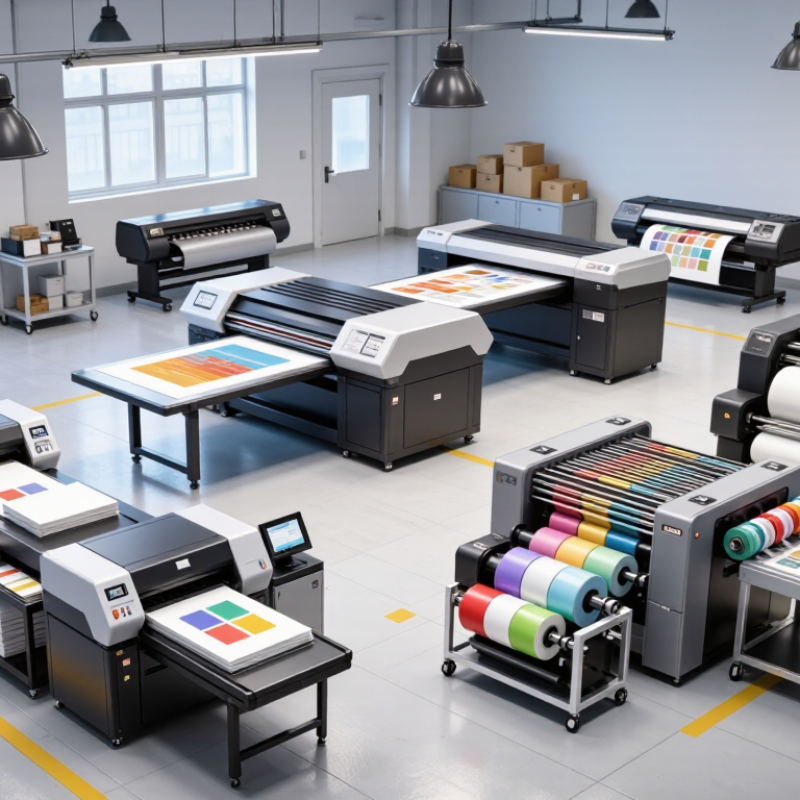
Seven leading machine types serve different production realities. Offset presses suit high-volume brochures, books, and cartons with consistent color. Digital toner presses handle short runs and variable data with minimal setup. Inkjet systems support signs, labels, textiles, and direct-to-object work. Flexographic Presses efficiently print films, bags, corrugated boards, and flexible packaging. Gravure delivers smooth, detailed images for very large packaging runs. Screen printing remains practical for garments, glass, and thick-ink effects. Dye-sublimation machines produce vivid polyester graphics, flags, and sportswear.

Inspect the output closely.

A small workshop may value digital flexibility more than offset speed. A packaging converter may prefer flexography, even with higher maintenance demands. Screen printing can look slower, but its heavy ink layer creates tactile results that digital systems may not match. I would not pretend one machine fits every buyer. Energy use, operator training, spare parts, and local service can change the real cost dramatically. A lower quotation may become expensive when ink waste, calibration drift, or downtime appears. Test samples on the actual material before signing.

Comparing Print Quality, Speed, Cost, and Material Compatibility

For global buyers in 2026, choosing among seven Printing Machines requires more than comparing advertised speed. Practical evaluations show that print quality depends on resolution, ink control, and material handling. Fine text should remain sharp at arm’s length. Uneven color bands are warning signs. A test sheet on paper, film, fabric, or rigid board reveals more than a showroom sample.

Speed matters, but usable output matters more. A machine rated for 60 meters per minute may slow down during detailed work. Setup time, drying time, and maintenance can change the real production cost. Calculate ink, power, replacement parts, operator time, and waste. A cheaper unit may become expensive after frequent cleaning cycles. I have found cost estimates often miss failed prints. That weakness deserves attention. When a Machine Cutting Machine is paired with a printer, check software compatibility and cutting accuracy before purchase.

Tips: Request sample prints using your actual materials. Measure color consistency across several sheets. Ask for maintenance schedules and service response times. Confirm whether local technicians can support the equipment. Leave space for ventilation and material loading. Do not select the fastest machine automatically. A reliable mid-speed system may produce more sellable work each day. Test thick, flexible, and textured media separately, because one successful sample proves very little.

Evaluating Automation, Connectivity, and Energy Efficiency

7 Best Printing Machines for Global Buyers in 2026

Automation now means more than pressing one button. A capable Printing Machine can adjust pressure, temperature, speed, and material feed automatically. During equipment trials, I check whether these controls reduce waste without hiding important settings. Operators still need clear access to manual adjustments. Small details matter. A confusing interface can slow production during a simple changeover.

Connectivity also deserves practical testing. Look for secure remote diagnostics, production reports, and compatibility with existing factory systems. Useful data should show downtime, energy use, error codes, and maintenance intervals. A machine may advertise intelligent monitoring, yet provide little information after installation. That gap matters. Buyers should request a live demonstration using their own files and materials, not only a prepared sample.

Energy efficiency is measured beyond a low standby figure. Check motor performance, heating cycles, compressed-air demand, and recovery time between jobs. Efficient machines can lower operating costs, especially where electricity prices vary by region. However, predictions are not guarantees. I would compare measured consumption across several production runs and record output quality. The phrase Press Machine Press Machine may appear in online searches, but buyers should focus on verified specifications, service access, spare-part availability, and local electrical compatibility. A detailed acceptance test protects the investment better than a polished brochure.

7 Best Printing Machines for Global Buyers in 2026 - Evaluating Automation, Connectivity, and Energy Efficiency
Rank Machine Type Typical Print Format Rated Throughput Typical Resolution Supported Media Automation Features Connectivity Energy-Efficiency Profile Best Application
01 High-Speed Production Inkjet Press Continuous web, up to approximately 22–30 in. wide Up to about 150–200 m/min, depending on coverage and substrate 600–1,200 dpi class Coated and uncoated paper, publishing stock, treated synthetic media Automatic web tension control, nozzle monitoring, inline quality inspection, job presets RIP workflow integration, JDF/JMF, cloud monitoring, Ethernet, remote diagnostics Water-based ink systems can reduce drying energy; efficiency improves with long, high-volume runs Books, transactional documents, direct mail, and variable-data publishing
02 High-Production Cut-Sheet Digital Press A3+/13 × 19 in. class sheets Approximately 70–140 A4 pages/min 1,200 × 1,200 dpi class or equivalent enhanced screening Textured, coated, uncoated, synthetic, and heavyweight stocks; commonly up to 350 gsm Automatic registration, paper-density detection, inline calibration, multi-tray feeding PDF/VT and variable-data workflows, JDF/JMF, production dashboard, Ethernet No plates or make-ready waste; sleep modes and demand-based fusing lower idle consumption Commercial short runs, marketing collateral, labels, and personalized documents
03 UV Flatbed Printer Rigid boards up to approximately 1.6 × 3.2 m About 40–120 m²/h, depending on print mode and ink coverage 600–1,200 dpi class PVC, acrylic, aluminum composite, corrugated board, glass, wood, and treated plastics Automatic table zoning, vacuum control, media-height sensing, pin registration, white-ink circulation RIP software, barcode job matching, Ethernet, production queues, remote status reporting Instant UV curing eliminates thermal drying; LED curing generally uses less power than conventional UV lamps Signage, displays, packaging prototypes, décor panels, and industrial graphics
04 Roll-to-Roll Eco-Solvent Printer 1.6–3.2 m roll width Approximately 20–80 m²/h for production-quality output 600–1,200 dpi class Self-adhesive vinyl, banner media, coated textile, wallpaper, and flexible films Automatic bidirectional alignment, media skew correction, take-up control, nozzle checks RIP integration, color-management profiles, Ethernet, job accounting, remote alerts Low-temperature heating and reduced-solvent formulations can lower ventilation and drying demand Outdoor signage, vehicle graphics, retail displays, banners, and wall coverings
05 Narrow-Web Flexographic Press Approximately 250–430 mm web width Up to roughly 100–180 m/min, depending on ink and finishing configuration Commonly 2,400 dpi plate-imaging workflow; print detail depends on anilox and plate setup Paper, film, foil, pressure-sensitive label stock, and unsupported flexible packaging substrates Servo registration, automatic impression setting, splice detection, tension control, inline inspection Press-management software, MIS integration, barcode verification, Ethernet, production reports Efficient for long runs; low-migration water-based or UV-curable inks can reduce solvent handling Labels, flexible packaging, paper bags, tags, and high-volume narrow-web products
06 Direct-to-Fabric Textile Printer 1.6–3.2 m roll width Approximately 30–150 m²/h, depending on ink type and quality mode 600–1,200 dpi class Polyester, cotton, viscose, silk, and blended fabrics with suitable pretreatment Automatic fabric tracking, nozzle compensation, take-up alignment, ink-level monitoring Textile RIP, color-library integration, ICC profiling, Ethernet, workflow monitoring Digital production reduces screens, plates, and excess ink; energy use depends on curing or steaming requirements Fashion sampling, home décor, soft signage, flags, and customized textile production
07 Industrial Single-Pass Inkjet Printer Customized line width; commonly 0.3–2.5 m Production-line speeds of approximately 50–150 m/min 600–1,200 dpi class Corrugated board, décor paper, ceramics, laminates, building materials, and coated industrial surfaces Closed-loop color control, automatic nozzle compensation, conveyor synchronization, inline inspection PLC and MES connectivity, OPC UA or industrial Ethernet, barcode integration, remote service tools Printing only at required locations minimizes setup waste; energy demand depends on curing and line integration Packaging, décor surfaces, ceramic tiles, laminates, and continuous industrial manufacturing
Data note: The specifications above are representative market ranges for comparable machine classes in 2026. Actual speed, resolution, media compatibility, power demand, and automation options vary by configuration, substrate, ink system, and production conditions.

Global Considerations for Shipping, Installation, and After-Sales Support

For global buyers comparing seven printing machines in 2026, shipping readiness deserves early attention. UNCTAD reports that more than 80% of world merchandise trade by volume moves by sea. Therefore, buyers should confirm crate dimensions, gross weight, moisture protection, and port handling requirements. Ask for shock indicators and a loading photograph. Small details matter.

Installation can fail without local preparation. Request a utility sheet showing voltage, frequency, compressed-air demand, floor loading, ventilation, and clearance. The World Bank’s 2023 Logistics Performance Index assesses customs, infrastructure, shipment reliability, logistics competence, tracking, and timeliness. These factors should shape supplier evaluation, not only purchase price. A machine arriving quickly is not useful if technicians cannot unload it safely. Keep spare filters, belts, sensors, and recommended lubricants onsite.

After-sales support needs measurable promises. Require remote-response times, technician availability, language coverage, training hours, and escalation procedures. A practical acceptance test should record print speed, registration accuracy, waste levels, and operating temperature. I would not trust “global support” without named service regions and documented cases. Remote guidance helps, but it cannot replace a trained person beside a misaligned machine. Buyers should also budget for customs delays and seasonal freight disruption. The checklist may still miss local realities, especially unstable power or limited technical labor. That is why a pre-shipment video audit is worth scheduling.

How to Choose the Right Printing Machine for Your Business Needs

7 Best Printing Machines for Global Buyers in 2026

Choosing the right machine starts with your actual workflow, not a glossy specification sheet. Estimate monthly volume, sheet size, substrate range, color requirements, and acceptable downtime. Grand View Research estimates the digital printing market reached about USD 38.4 billion in 2023, with growth continuing through 2030. This suggests strong demand, but not every business needs the fastest system. A small packaging workshop may gain more from flexible short runs than extreme production speed. My first shortlist was wrong because I ignored drying time. That mistake was expensive.

Compare total ownership costs carefully. Include ink, plates, electricity, maintenance, operator training, software, and waste. Smithers’ Future of Digital Print to 2029 identifies packaging and labels as important growth areas, where accurate registration and repeatable color matter daily. Ask suppliers for a live sample using your paper or film. Measure output after an hour, not after one perfect demonstration. A Printing Printing Machine should also support local voltage, safety requirements, service response, and legally compliant inks. These details often decide whether production feels reliable.

Tips: Build a three-year cost model before buying. Record real weekly orders, including rush jobs and rejected sheets. Leave capacity for growth, but avoid paying for unused speed. Request maintenance schedules in writing. If two machines seem equal, choose the one your operators can learn quickly. Convenience is not a technical weakness; sometimes it protects profit.

7 Best Printing Machines for Global Buyers in 2026

How to Choose the Right Printing Machine for Your Business Needs

The chart compares typical production throughput by machine category. Figures are indicative industry ranges converted to approximate impressions per hour and can vary with media size, print coverage, resolution, finishing, and operating conditions. Choose based on required volume, substrate flexibility, color quality, automation, and total operating cost.

FAQS

How should buyers compare printing machines?

Compare production needs, not catalogue prices. Check volume, materials, resolution, speed, and setup waste. A label machine may fail on rigid boards. Test actual substrates before deciding.

Why are sample prints important?

Request samples on your paper, film, fabric, or rigid board. Inspect sharp text, colour consistency, ink adhesion, drying time, and registration. One successful sheet proves very little. Test it anyway.

Is the fastest machine always the best choice?

Not always. Advertised speed may drop during detailed printing, drying, cleaning, or setup. Calculate usable output, not only metres per minute. A reliable mid-speed machine may produce more saleable work daily.

What costs should buyers include?

Include ink, electricity, maintenance, shipping, installation, training, spare parts, labour, and failed prints. Cleaning cycles can create hidden expenses. Small details matter.

What should buyers check before shipping?

Confirm crate dimensions, gross weight, moisture protection, shock indicators, and port handling requirements. Request a loading photograph. Prepare suitable unloading equipment before arrival.

Which installation details require early confirmation?

Request specifications for voltage, frequency, compressed air, floor loading, ventilation, and clearance. Check local electrical and workplace safety requirements. A machine cannot run safely without proper preparation.

How can buyers evaluate after-sales support?

Ask for response times, technician availability, language coverage, training hours, and escalation procedures. Confirm named service regions and documented cases. “Global support” needs evidence.

How do local conditions affect machine reliability?

Humidity, dust, unstable power, and local climate can affect performance. Confirm spare-part availability near your region. I once underestimated cleaning access, and maintenance took much longer.

How much future capacity should buyers purchase?

Choose capacity that matches current demand and realistic growth over two years. Excess capacity wastes capital, while limited capacity creates restrictions. The forecast may still be wrong. Review it carefully.

Conclusion

Choosing the right printing machine in 2026 requires more than comparing price tags. Global buyers should evaluate print quality, production speed, operating costs, material compatibility, automation, connectivity, and energy efficiency. The best solution depends on the application, whether it involves short-run customization, high-volume commercial production, packaging, labels, textiles, or specialty materials. A high-performance Printing Machine Printing Machine should deliver consistent results while reducing waste, simplifying workflow management, and supporting reliable daily operation.

International purchasing also requires careful planning for shipping, installation, staff training, maintenance, spare parts, warranty coverage, and after-sales support. Buyers should confirm power requirements, environmental conditions, software compatibility, and local service availability before making a decision. By balancing productivity, flexibility, total ownership cost, sustainability, and long-term support, businesses can select a machine that fits their current workload while remaining adaptable to future growth.

Ethan

Ethan

Ethan is a dedicated marketing professional at Jinyuan Mechanical, a leading provider of slitting and rewinding equipment solutions. With a deep expertise in the company's product offerings, he plays a pivotal role in bridging the gap between technology and customer needs. Ethan is committed to......
Previous China Best Label Press Manufacturer How to Choose?