Contact immediately
Leave Your Message
- Contact WhatsApp

-
 Contact Phone
-
 Contact Email
Deciding on a 4 Color Screen Printing Machine in 2026 isn’t just about comparing prices or flipping through photos. For international buyers, it’s really about looking beyond the surface—things like dependable registration, practical curing controls, and after-sale support that actually sticks around after setup. Sure, a machine might look sleek online, but it’s often the little details that make all the difference in everyday productivity. Think about frame size, squeegee pressure, pneumatic needs, compatibility with flash dryers, and how easy it is for operators to access different parts. These factors directly impact the quality of prints on cotton shirts, tote bags, posters, or promotional textiles.
Scott Fresener, a seasoned expert in screen printing and founder of the U.S. Screen Printing Institute, once said, “Consistency is the foundation of profitable screen printing.” That’s as true today as it was back then. When choosing a reliable 4 Color Screen Printing Machine, you want it to deliver consistent results, not just produce eye-catching samples. It’s a good idea to ask for registration tolerances, production videos, spare parts lists, warranty info, and details about training—don’t be shy about asking tough questions.
In this guide, I’ll look at four solid machine options for international buyers in 2026. We’ll consider things like manual versus semi-automatic setups, electrical standards, how well the machines hold up during shipping, what’s required for installation, and how responsive customer support is afterward. Experience from real workshops really matters here. Operators notice problems like vibrations, awkward loading spaces, slow pallet movement, and fatigue from constant adjustments. Sometimes manufacturers boast about maximum speeds but forget to mention setup times—that’s something you should definitely question.
Remember, no one-size-fits-all machine exists. A smaller, more compact model might be perfect for a startup, while a heavy-duty press is probably better suited for larger contract work. Factors like your budget, worker skill level, order volumes, and local support services all play a role in your decision. This comparison is meant to give you useful insights, but at the end of the day, the specs alone can’t guarantee everything—you’ve gotta consider how it’ll perform in your specific shop.
What Is a 4 Color Screen Printing Machine?
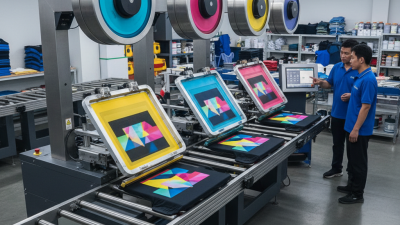
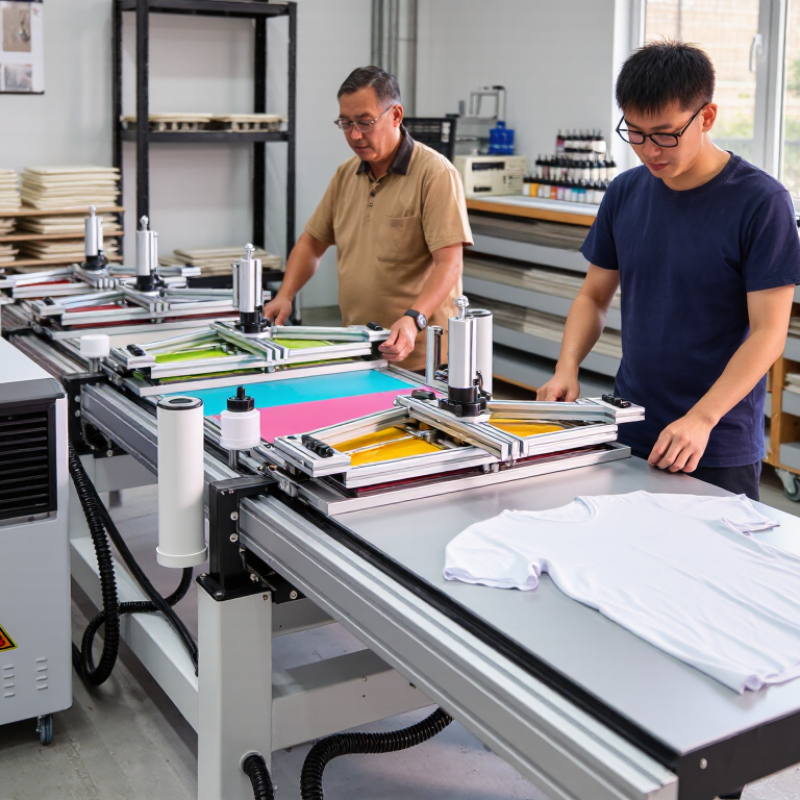
A 4 Color Screen Printing Machine is equipment designed to apply four separate ink layers onto one item. It commonly uses four screens, four printing stations, and a shared pallet. Each screen carries part of the artwork. The machine prints one color, rotates the pallet, and adds the next layer.
The four colors may be process colors, such as cyan, magenta, yellow, and black. They may also be selected spot colors for logos or simple graphics. A registration system keeps each screen aligned. Even a small shift can create blurred edges or unwanted white gaps. That detail matters on cotton shirts, flat fabric, paper, and other printable surfaces.
An Electric Screen Printing Machine usually uses a motor to rotate the carousel or move the printing head. Some models include adjustable squeegee pressure, stroke speed, and screen height. These controls help operators handle thin lines, large solid areas, and different ink types. In daily production, screen tension and ink viscosity still affect the result. The machine cannot correct every setup mistake.
Watch the alignment closely. A practical operator checks the first few prints under bright light before continuing. I have found that this simple step prevents wasted materials. However, four stations do not automatically mean four perfect colors. Cleaning, curing, and consistent pressure still require experience. The right machine should match expected volume, product size, operator skill, and available workspace.
A 4 color screen Printing Machine uses four screen-printing stations to apply four separate ink colors to the same item. The comparison below focuses on common machine configurations and typical technical ranges available in the global market.
| Machine Configuration | Typical Print Area | Typical Production Speed | Suitable Substrates | Loading and Unloading | Registration Method | Typical Power Requirement | Approximate Footprint | Best For | Key Buying Consideration |
|---|---|---|---|---|---|---|---|---|---|
| 4-Color Manual Carousel | Up to approximately 400 × 500 mm | 100–250 pieces per hour, depending on the operator and curing process | Cotton garments, polyester garments, tote bags, small fabric panels, paper and cardboard | Manual loading and unloading | Manual micro-registration or mechanical registration | Usually 0.5–1.5 kW for the press; curing equipment is additional | Approximately 1.5–2.5 m², excluding a separate dryer | Start-ups, training centers, small print shops and low-volume custom orders | Lowest investment and simple maintenance, but output depends heavily on operator skill |
| 4-Color Semi-Automatic Carousel | Approximately 400 × 500 mm to 500 × 700 mm | 250–500 pieces per hour, depending on garment type, ink and flash-curing requirements | Garments, fabric bags, textiles, posters and flat promotional items | Manual loading and unloading; automatic or pneumatic print stroke | Micro-registration system with adjustable screen holders | Approximately 2–5 kW for the press; air compressor and dryer are additional | Approximately 3–6 m², excluding auxiliary equipment | Small and medium workshops requiring better consistency and higher throughput | Check air consumption, platen size, stroke adjustment and compatibility with the local power supply |
| 4-Color Automatic Textile Press | Approximately 400 × 500 mm to 600 × 800 mm | 500–1,000 pieces per hour under suitable production conditions | Cotton, cotton blends, polyester garments, sportswear, hoodies and textile panels | Usually manual loading with automatic screen movement and print cycles | Mechanical micro-registration; optional camera or optical registration on some systems | Approximately 5–12 kW for the press; compressor, flash unit and conveyor dryer are additional | Approximately 8–18 m² with standard operating clearance | Commercial garment printers with regular medium-volume production | Production speed must be evaluated together with curing capacity, operator workflow and ventilation |
| 4-Color Automatic Flatbed Press | Approximately 300 × 400 mm to 600 × 900 mm | 300–800 flat items per hour, depending on material handling and print coverage | Paper, cardboard, plastic sheets, metal panels, glass, wood and other rigid or flat materials | Manual, semi-automatic or conveyor-assisted handling | Adjustable registration guides, pins or vacuum-table registration | Approximately 3–10 kW for the press; drying and vacuum systems are additional | Approximately 5–15 m², depending on table size and feeding system | Packaging, signage, promotional products and industrial flat-surface printing | Confirm maximum substrate thickness, vacuum-table capacity, ink compatibility and drying method |
| 4-Color Pneumatic Press | Approximately 400 × 500 mm to 500 × 700 mm | 300–700 pieces per hour, depending on print stroke and air pressure | Textiles, paper products, plastic items and selected promotional products | Manual loading; pneumatic print and screen movement | Mechanical registration with adjustable screen clamps | Approximately 2–6 kW plus compressed air; many models require roughly 6–8 bar operating pressure | Approximately 4–10 m², excluding compressor and dryer | Workshops seeking repeatable print pressure with lower manual effort | Evaluate compressor capacity, air quality, noise level, cylinder serviceability and emergency controls |
| 4-Color UV Screen Printing Press | Approximately 300 × 400 mm to 600 × 800 mm | 200–600 pieces per hour, depending on substrate, ink layer and UV curing speed | Plastic sheets, glass, metal, coated paper, wood and selected rigid promotional items | Manual or semi-automatic feeding; automatic screen sequence on advanced models | Precision mechanical registration; vacuum or pin registration may be available | Approximately 8–25 kW including UV curing, depending on lamp or LED system | Approximately 8–20 m² with curing and ventilation space | Durable graphics, industrial markings and rigid promotional products | Check UV shielding, exhaust requirements, ink system compatibility, substrate heat resistance and operator safety |
Data note: The figures are typical industry ranges rather than guaranteed machine specifications. Actual speed, power consumption, print quality and usable print area vary with machine design, ink type, substrate, artwork coverage, screen mesh, curing equipment, operator skill and local electrical standards. A four-color press does not necessarily print four colors simultaneously; most machines print the colors sequentially while maintaining registration between stations.
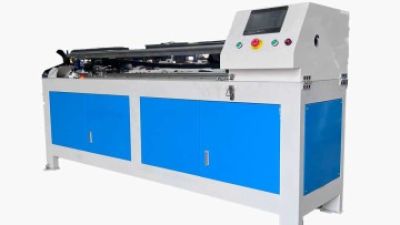
The Intelligent Programmable Paper Tube Slitting Machine is engineered for manufacturers seeking greater precision, flexibility, and production efficiency. Developed for demanding paper tube processing environments, it uses an advanced CNC control system to program cutting dimensions for tubes of different sizes. With cutting accuracy of up to ±0.1 mm, the machine supports consistent results, reduces material waste, and helps maintain stable product quality during continuous operation. Its robust structure and user-friendly interface make it suitable for paper tube suppliers and factories handling varied production orders.
An intelligent memory function allows operators to save multiple cutting schemes and switch between specifications with a single command, reducing setup time and minimizing manual adjustments. The multi-segment cutting program is designed to manage complex cutting patterns, making it practical for customized tube processing and high-precision applications. By combining programmable control, reliable performance, and efficient operation, this CNC paper tube cutter provides a streamlined solution for manufacturers upgrading their production capabilities and responding quickly to changing market requirements.
It applies four separate ink layers to one product. Each layer uses a different screen and printing station. The pallet rotates between colors.
It can use cyan, magenta, yellow, and black. It can also use selected spot colors for logos or simple artwork.
Common materials include cotton shirts, flat fabric, paper, and similar printable surfaces. Always test the actual material first.
Registration keeps every screen aligned. A small shift can cause blurred edges or white gaps. Bright-light checks help catch problems early.
Compare print area, registration accuracy, pressure control, indexing speed, and machine stability. Ask for live samples using your artwork and materials.
No. Automated movement can reduce manual adjustments. However, advanced controls may increase repair costs and training needs. More automation is not always better.
It is essential. Uneven curing may cause cracked prints, even with accurate registration. Check airflow, energy use, temperature, and curing consistency.
The floor should be level and stable. Confirm power, grounding, ventilation, compressed air, and service space. A narrow maintenance gap becomes inconvenient quickly.
Follow measured maintenance intervals, not memory. Inspect screens, sensors, seals, filters, bearings, and blades regularly. Remove dried ink before it hardens.
Consider electricity, maintenance, spare parts, training, waste, and downtime. The purchase price alone can be misleading. I might underestimate downtime.
Choosing the right 4 Color Screen Printing Machine in 2026 requires more than comparing price and print speed. This equipment uses four separate color stations to apply ink layers in sequence, allowing efficient production of multicolor designs on garments, textiles, promotional materials, and other suitable surfaces. Buyers should compare print area, station configuration, registration accuracy, frame compatibility, manual or automatic operation, curing requirements, power supply, safety features, and ease of adjustment. Different machine types may suit small workshops, growing businesses, or high-volume production environments.
For global buyers, the best choice should match local electrical standards, available workspace, labor skills, production volume, and after-sales support arrangements. A practical evaluation should also include shipping conditions, installation guidance, spare-part availability, operator training, and long-term maintenance needs. Regular cleaning, accurate alignment, proper ink handling, and routine inspection can help maintain consistent quality and extend service life. By balancing productivity, flexibility, operating costs, and regional requirements, businesses can select a reliable solution for sustainable global production.