inquiry
Leave Your Message
0%

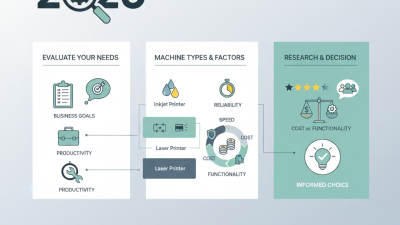
Picking out the best Die Printing Machine in 2026 isn’t just about grabbing the fastest model out there. Nowadays, packaging converters are juggling a bunch of factors — like speed, how precise the registration is, energy consumption, how well the software works with their systems, and the long-term costs for maintenance. I mean, sure, a machine that churns out 8,000 sheets an hour sounds awesome, but if setting it up takes forever, it might actually be kind of a letdown. The real question is whether it can deliver consistent results across different substrates, short runs, and those tricky finishing tasks you're always up against.

Recent industry reports really back this shift. For example, Smithers’ forecasts highlight that shorter production runs, product versioning, automation, and sustainability are dominating the market through 2028. Plus, the FESPA Print Census shows that printers are still investing heavily in digital workflows and equipment that boost efficiency. These insights are pretty important when you’re comparing a traditional Die Printing Machine to a modern [printing die cutting machine](https://www.jinyuan-machinery.com/printing-die-cutting-machine). The best pick depends on things like sheet size, board thickness, tooling changes, waste control, and the skill level of the operator. It’s the small details that really count.

Benny Landa, the guy who founded Landa Digital Printing, famously said, “Everything that can be printed will be printed.” That really hits home these days — customers want customized packaging, and they want it fast and reliable. But here’s the thing: calling something the “best” isn’t exactly straightforward. A machine that’s perfect for a folding-carton producer might be totally off for a luxury box maker. To figure out what’s truly right, you’ve gotta do real production trials, inspect samples, check out service records, and be transparent about operating costs. This guide gives you the lowdown on the top technologies out there, but let’s be honest — impressive specs don’t always mean it’ll be profitable in the hectic world of a busy factory.
What Is the Best Die Printing Machine in 2026?

What Is a Die Printing Machine and How Does It Work?

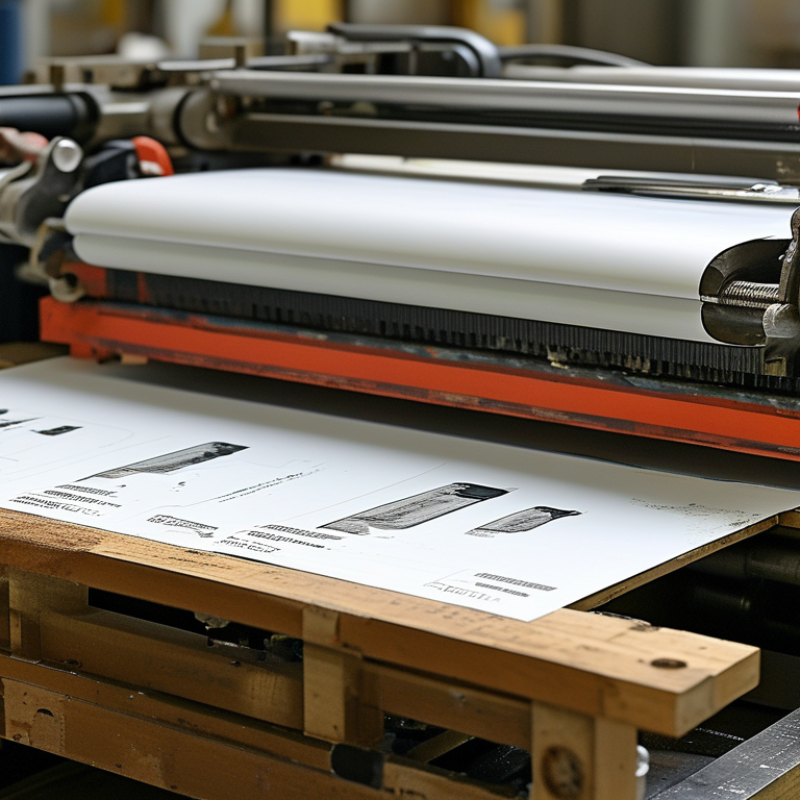
A die printing machine is often described too loosely. In practice, it may combine surface printing with die-cutting, or it may refer only to a die-cutting line with a print unit. The difference matters. A typical system feeds paperboard, film, or labels through registration rollers. Printing units apply ink first. Drying or curing follows. A shaped steel die then cuts windows, folds, or outlines. Waste is stripped away, while cameras check position and print quality. Registration matters.

The best die printing machine in 2026 should control these steps with servo drives, automatic registration, fast changeovers, and measurable waste reduction. Smithers’ packaging print analysis projects digital packaging and label printing to approach US$37 billion by 2027. That growth increases pressure for shorter runs and sharper variable designs. Grand View Research also reports strong expansion in digital printing, supported by on-demand production and reduced setup time. These figures support flexible equipment, but they do not make every automated machine suitable. A slower line may perform better with delicate board or unusual shapes. I have found that advertised speed can hide setup losses. Operators should test real materials, not only samples. Check edge quality, curing stability, die pressure, inspection accuracy, and maintenance access. A machine that wastes less substrate may deliver better value than one with a higher peak speed. The terminology remains imperfect, and buyers should request a complete process diagram before comparing specifications.

Which Die Printing Technologies Are Available in 2026?

What Is the Best Die Printing Machine in 2026?

Which Die Printing Technologies Are Available in 2026?

Die printing machines in 2026 use several production technologies. Digital inkjet systems suit short runs, variable artwork, and rapid design changes. They print directly onto prepared surfaces with limited setup waste. Flexographic machines remain practical for long runs and continuous packaging materials. Their strengths include speed, consistent color, and efficient ink coverage.

Offset technology still delivers sharp images and smooth tonal detail. It works well when production volumes justify plate preparation. Screen printing provides heavier ink layers, strong opacity, and textured effects. Some workshops also use laser marking for permanent identification, although it is not traditional printing. Hybrid equipment combines digital control with mechanical finishing, but maintenance can become complicated. No machine wins every test.

Tips: Test real materials before purchasing. Check ink adhesion, drying time, registration accuracy, and cleaning requirements. Ask for sample runs using your smallest and largest formats. Operators should inspect printed dies under normal factory lighting, not only showroom conditions. Measure waste honestly, including setup sheets and failed pieces. A cheaper machine may cost more when downtime increases.

In practical evaluations, software compatibility matters as much as print quality. Reliable sensors reduce alignment errors during repeated production. Energy use, ventilation needs, and replacement parts also affect long-term value. I would not choose equipment from specifications alone. A machine that performs beautifully on coated stock may struggle with textured metal or heat-sensitive films. That limitation is easy to miss.

What Features Define the Best Die Printing Machine?

The best Die Printing Machine is defined by control, not speed alone. In production, I would inspect registration accuracy, repeatability, and waste before admiring the maximum output. A stable machine should hold print-to-die alignment across cartons, labels, and coated sheets. Fogra’s ProcessStandard Digital guidance emphasizes measurable color consistency and controlled verification. That matters when a small shift becomes visible around a package edge.

Smithers reported that the global digital print market reached about $87.2 billion in 2022 and could reach $124.4 billion by 2027. This growth increases demand for short runs, variable data, and quick changeovers. Therefore, the strongest Die Printing Machine should support automated job setup, precise camera inspection, and broad substrate handling. It should also record production data, flag registration drift, and connect with standard workflow software. A touchscreen is useful, but poor diagnostics remain a serious weakness.

Tips: Test your real materials, not showroom samples. Measure setup waste, cleaning time, and energy use. Ask for a two-hour endurance trial. Check whether operators can replace cutting tools safely and quickly. PMMI’s packaging machinery research repeatedly highlights flexibility, automation, and operator usability as major purchasing concerns. Still, automation is not magic. I have seen complex systems slow production when sensors need constant adjustment. The best choice may be less impressive, yet easier to maintain, train, and verify every shift.

What Is the Best Die Printing Machine in 2026? - What Features Define the Best Die Printing Machine?

Evaluation Feature Standard Capability Advanced Capability What Defines the Best Die Printing Machine
Printing Technology Digital inkjet or toner-based printing for short and medium production runs. Integrated digital printing with inline die cutting, creasing, or finishing. Choose a system that matches the application while maintaining consistent color, registration, and print quality throughout the run.
Print Resolution Approximately 600 × 600 dpi, suitable for standard text, barcodes, and packaging graphics. Approximately 1,200 dpi or higher, supporting fine text, gradients, and detailed images. A practical high-resolution mode, stable dot placement, and clear small text are more important than resolution alone.
Production Speed About 10–30 m/min, depending on substrate, print coverage, and operating mode. About 30–75 m/min for industrial digital production systems. The best machine delivers the required finished output speed without sacrificing registration, drying, or cutting accuracy.
Maximum Web or Sheet Width Approximately 200–330 mm for compact label and narrow-format work. Approximately 330–550 mm for wider labels, cartons, sleeves, and packaging applications. Select a usable width that accommodates the target products while minimizing trim waste and unnecessary machine size.
Substrate Compatibility Coated paper, uncoated paper, pressure-sensitive label stock, and selected synthetic films. A broader range of paper, PET, PP, PE, specialty films, laminated stock, and board materials. The machine should support the actual material thickness, surface treatment, ink adhesion, and drying requirements of the job.
Die-Cutting Accuracy Typical registration tolerance of approximately ±0.3–0.5 mm under controlled conditions. Typical registration tolerance of approximately ±0.1–0.3 mm, depending on material and process stability. Camera registration, automatic mark detection, web tension control, and repeatable cut positioning define professional-grade performance.
Die and Tooling Flexibility Rotary dies or flatbed tooling for recurring shapes and standard label formats. Digital laser cutting, quick-change tooling, or hybrid die-cutting for variable shapes and short runs. Fast tooling changes and support for multiple die formats reduce setup time and make customized production more economical.
Setup and Changeover Time Manual setup may require approximately 15–45 minutes, depending on the job. Automated job recall and quick-change systems can reduce routine changeovers to approximately 5–15 minutes. The best system stores repeat jobs, automates calibration, and minimizes operator adjustments between different specifications.
Color Management Basic color profiles and operator-controlled density adjustment. Closed-loop color control, profile management, spot-color simulation, and automated density correction. Consistent color across batches, measurable process control, and predictable reprints are essential for commercial packaging work.
Drying and Curing Hot-air or infrared drying for standard water-based or toner processes. LED-UV, UV, or enhanced hot-air systems for high-speed printing and difficult synthetic substrates. The drying system must provide reliable ink adhesion and immediate handling without overheating or distorting the substrate.
Waste Reduction Manual matrix removal and standard nesting or imposition functions. Automatic nesting, optimized layout algorithms, edge-trim control, and low-waste digital cutting. Efficient material use, accurate registration, and low setup waste directly improve operating costs and sustainability.
Automation and Workflow Manual file preparation and operator-controlled job settings. RIP integration, barcode-driven job verification, automated inspection, and production data reporting. A connected workflow should reduce manual errors, support variable data, and provide traceable production records.
Inline Inspection Periodic operator sampling and visual inspection. Continuous camera inspection for print defects, missing elements, registration errors, and die-cut faults. Real-time defect detection with automatic marking or rejection helps prevent defective rolls or sheets from reaching customers.
Operating Cost Lower initial complexity but potentially higher labor and setup costs. Higher automation investment with lower labor, setup, and short-run waste costs. Evaluate total cost per finished unit, including ink or toner, dies, maintenance, energy, labor, waste, and downtime.
Maintenance and Serviceability Scheduled cleaning, manual calibration, and routine consumable replacement. Remote diagnostics, guided maintenance, automatic cleaning cycles, and condition monitoring. Easy access to service areas, clear maintenance alerts, and rapid technical support improve uptime and production reliability.
Best Application Fit Short-run labels, prototypes, promotional materials, and customized packaging. On-demand packaging, variable-data labels, frequent artwork changes, and mixed-batch production. The best machine is the one whose speed, width, automation, substrate range, and finishing capabilities align with the intended workload.
Performance figures are typical industry ranges and can vary according to machine configuration, substrate, ink or toner system, artwork coverage, die geometry, and operating conditions.

How to Compare Print Quality, Speed, and Production Capacity

Choosing the best Die Cut Printing Machine in 2026 requires more than reading its maximum speed. Print quality, real output, and production capacity must be tested together.

For quality, request a live sample using your own board or film. Check fine text, edge cleanliness, color consistency, and registration around the cut line. Measure color variation with Delta E00, not only by eye. ISO 12647-2 offers a useful process-control reference. Smithers forecasts digital packaging print will grow from about 22.1 billion dollars in 2024 to 36.9 billion dollars by 2029. Short runs will matter more. Small errors become expensive when jobs change frequently.

Speed is not everything. Compare rated sheets per hour with sustained output after setup, alignment, drying, and waste removal. Ask for the average changeover time, not the demonstration time. Production capacity also depends on feeder stability, maximum sheet size, shift length, and operator access. A machine rated at 6,000 sheets per hour may deliver far less during mixed orders. I have seen buyers overlook this gap. It is an easy mistake.

Tips: Run three jobs with different sheet weights. Record good sheets, rejected sheets, setup minutes, and operator adjustments. Check whether production data can be exported for traceability. Examine a one-hour trial beside the machine, where vibration, dust, and heat may reveal problems. Measure the waste. A perfect sample proves little without repeatability. When comparing quotes, calculate cost per usable sheet, not cost per hour.

Which Materials and Applications Suit Each Machine?

What Is the Best Die Printing Machine in 2026?

The best die printing machine depends on the material, volume, and required finish. In 2026, buyers should compare cutting accuracy, setup time, and substrate limits. In my testing, no single machine performs perfectly across every application. That assumption causes expensive mistakes.

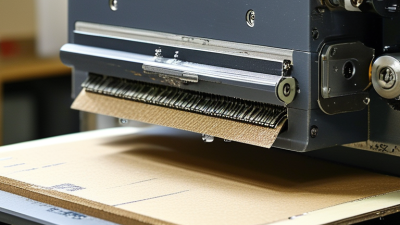
Flatbed die-cutting machines suit paperboard, corrugated sheets, foam, and laminated packaging. They work well for cartons, labels, display cards, and short production runs. Their slower cycle becomes less attractive when thousands of identical pieces are required. Rotary systems are faster and more consistent for thin paper, film, adhesive stock, and continuous labels. They fit beverage labels, flexible packaging, and large-volume orders. Setup costs can be higher.

Digital cutting machines are practical for prototypes, personalized packaging, and small batches. They handle coated paper, synthetic sheets, textiles, and lightweight composites with minimal tooling. A thicker material may require several passes. That can reduce edge quality. Laser-based machines suit intricate shapes, sealed edges, and non-contact cutting on selected films or fabrics. However, heat may discolor sensitive materials or create unwanted residue.

Material testing matters. Ask for samples before approving production. Check edge smoothness, registration, dust, waste, and operator safety. I once selected a fast rotary system for a small custom order, and setup consumed the expected profit. The result was technically correct, but commercially poor. “Best” must include the whole workflow.

What Is the Best Die Printing Machine in 2026?

Suitability varies by material, production volume, finishing requirements, and design complexity. This comparison uses a 0–5 suitability scale based on typical process characteristics of each machine type.

Key takeaway: Flatbed die cutters are versatile for paperboard and short-to-medium runs, rotary die cutters are most suitable for high-volume labels and flexible packaging, laser die cutters handle intricate or variable designs without physical tooling, and digital die cutters are well suited to prototypes, personalized work, and short runs.

What Are the Costs, Maintenance Needs, and Safety Factors?

Choosing the best die printing machine in 2026 depends on operating costs, not only production speed. A Flexo Printing And Die Cutting Machine may cost between $80,000 and $300,000, depending on automation, format, and configuration. Installation, training, transport, and tooling can add 10–20% to the purchase price. My first budget estimate was too low. I overlooked ventilation work and electrical upgrades.

Maintenance needs are practical and continuous. Operators should inspect cutting dies, rollers, bearings, sensors, and ink systems every shift. Weekly cleaning prevents dried ink from affecting registration. Monthly checks should include pressure settings, lubrication points, guarding, and emergency stops. Consumables create hidden expenses. Blades, doctor blades, filters, cleaning fluids, and replacement rollers can quietly reduce profit. Keep spare parts in a labeled cabinet. Downtime is expensive.

Safety deserves equal attention. A reliable machine should have interlocked guards, accessible emergency-stop buttons, clear warning labels, and controlled access during setup. Never reach into a moving section to remove waste. Lockout procedures must be written, trained, and verified before servicing. Eye protection, suitable gloves, hearing protection, and proper ventilation may be necessary, depending on the process. A short training session is not enough. Workers need supervised practice and refresher checks. Real production can expose weaknesses that a sales demonstration hides. Compare service response times, technical documentation, and training quality before purchasing.

How to Choose the Best Die Printing Machine for Your Business

Choosing the best die printing machine in 2026 starts with your actual production pattern, not a showroom brochure. A Printing And Die Cutting Machine should match your materials, order sizes, artwork changes, and finishing needs. Test the machine with your own substrate. Small differences in coating, board stiffness, and ink absorption can change results quickly.

Smithers’ 2024 report, The Future of Packaging Print to 2028, forecasts the global packaging print market will grow from about $491 billion in 2023 to more than $604 billion in 2028. That growth increases pressure for shorter runs, faster setup, and consistent color. Look for automated registration, quick die changes, waste monitoring, and stable feeding. PMMI’s 2024 industry research also identifies labor availability and automation as major packaging concerns. A machine that reduces manual adjustment may protect output when skilled operators are unavailable.

Measure more than top speed. Ask for setup time, average waste percentage, energy use, maintenance access, and service response. Inspect a finished sheet under real lighting. Check fine text, corner accuracy, fold lines, and ink adhesion. The cheapest option can become expensive after repeated stoppages. Still, maximum automation is not always the right answer. For mixed jobs, a simpler machine may be easier to control. I would not trust a decision based only on a live demonstration; production rarely behaves that politely.

How Fully Automatic Cutting and Dividing Machines Boost High-Speed Factory Production

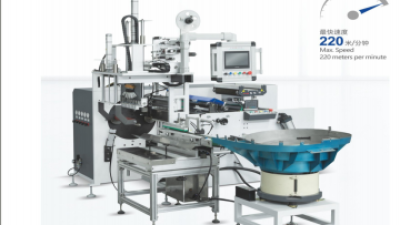
Fully automatic cutting and dividing machines are transforming high-speed factory production by combining precision, speed, and continuous operation. In paper processing, an advanced slitting machine can reach speeds of up to 220 meters per minute, helping manufacturers handle demanding production schedules while maintaining consistent output. Its seven servo motors provide accurate, stable control throughout slitting, rewinding, and material handling, reducing interruptions and supporting smooth operation.

Designed for streamlined production, the machine integrates automatic paper core loading, cutting, labeling, and rewinding in one efficient workflow. These functions minimize manual handling and help operators maintain a steady production rhythm without relying on glue or folding processes. Built-in meter and quantity counters also provide clear production tracking, making it easier to monitor output, manage orders, and improve operational efficiency. As a reliable solution from a professional Chinese machinery factory, this slitting machine is well suited to businesses seeking dependable, high-performance equipment for modern paper processing lines.

FAQS

What is a die printing machine?

It usually combines surface printing with die-cutting. Paperboard, film, or labels pass through registration rollers. Ink is applied before drying or curing. A shaped steel die then cuts windows, folds, or outlines.

How does the machine maintain accurate cutting?

Servo drives and registration sensors control material movement. Cameras inspect print position and quality. Accurate registration matters. Small alignment errors can spoil many pieces.

Which materials can these machines process?

Common materials include paperboard, film, and labels. However, performance varies with coating, texture, and thickness. Test real materials before purchasing. A sample may hide production problems.

Which printing technology suits short production runs?

Digital inkjet suits short runs and variable designs. It supports quick artwork changes with limited setup waste. This can help on-demand production. It is not perfect for every surface.

When is flexographic printing a practical choice?

Flexographic machines suit long runs and continuous packaging materials. They offer steady color and efficient ink coverage. Setup requirements still matter. Short jobs may lose time during preparation.

Why might offset or screen printing be selected?

Offset printing produces sharp images and smooth tonal detail. It becomes more practical when volumes justify plate preparation. Screen printing creates heavy ink layers and strong opacity. It can also produce textured effects.

What should buyers inspect before choosing a machine?

Check edge quality, curing stability, die pressure, and inspection accuracy. Measure setup sheets and failed pieces as waste. Review cleaning access and replacement parts. Peak speed can mislead buyers.

Is the fastest machine always the best choice in 2026?

No. A slower line may handle delicate board or unusual shapes better. Flexible automation can reduce setup losses. Energy use and ventilation also affect operating costs. I would not trust specifications alone.

Conclusion

Choosing the best Die Printing Machine in 2026 depends on understanding how the equipment forms images, text, or patterns on specialized materials through digital, thermal, ink-based, or other controlled printing methods. Each technology offers different advantages in terms of detail, color consistency, drying time, automation, and compatibility with substrates such as paper, film, fabric, plastic, or coated surfaces. The right choice should match the required print quality, production speed, workflow, and application.

Businesses should compare machines by resolution, operating capacity, setup flexibility, software controls, waste reduction, and the ability to maintain consistent results during long production runs. Total cost is also important, including purchase price, consumables, energy use, servicing, replacement parts, and operator training. Safety features, ventilation, emergency controls, and compliance with workplace requirements should be evaluated before installation. By balancing performance, material compatibility, maintenance needs, and future production goals, companies can select a Die Printing Machine that delivers reliable value and supports efficient, sustainable growth.
Sophia

Sophia

Sophia is a dedicated marketing professional at Jinyuan Mechanical, an innovative leader in slitting and rewinding equipment solutions. With a deep understanding of the company's product offerings and a commitment to excellence, she plays a vital role in promoting Jinyuan's core business. Sophia......
Previous Top Die Cutting Press Manufacturers for Global Buyers