When you're picking out a tabletop letterpress, honestly, it’s not just about grabbing the tiniest one you can find. It’s more like figuring out what you’ll actually be printing day to day. Sure, a compact model is great for stuff like cards, invites, labels, or small art prints—but the size alone doesn’t tell you much about print quality. You’ve gotta look at the printable area, the press bed, and what type or plate sizes you can use. Those really make or break what you can create. You know, those details? They do matter.
Alright, so before you start comparing models, think about what you're actually going to print and how frequently you'll be using the press. You definitely want to check the manufacturer's specs – the impression area, the adjustment range, and what plate thickness they say it works with. And take a close look at the rollers, the roller trucks, and the whole inking system. Because if they don't make even contact, you'll get patchy coverage all over your sheet – and that's a pain. Also, if you're planning to print fine type, you really need to pay attention to registration and pressure control. Those are crucial. Before you commit, it's worth asking about replacement parts, setup instructions, and tech support. Trust me, those are much harder to gauge than a glossy product photo, you know?
When you're picking a press, you want something that actually fits your workspace—and don't forget to leave a little room for paper, cleanup, and those routine adjustments you'll inevitably need to make. So grab a tape measure and check the table, making sure you account for the crank or lever too. Then think about what you're really going to be doing with it. A heavier or pricier model isn't automatically the right choice. If you're only doing the occasional project, a simpler press might be all you need. But if you're producing stuff regularly, you'll probably want something sturdier with more precise controls. Honestly, there's no one-size-fits-all answer. Honestly, some specs are tough to really judge until you see the press in action. So if a claim sounds vague or too good to be true, take it with a grain of salt and try to get a demo if you can. That's the best way to know for sure. This guide is here to help you figure out what features to compare and what questions you should be asking before you hand over your money.
Define Your Printing Needs and Workspace
Choosing a Tabletop Printing Press begins with the work you actually plan to print. Small cards, short-run invitations, and practice pulls need different bed sizes and pressure than larger sheets. Measure your widest sheet, then allow room for registration guides, drying racks, and paper storage. A press that fits the bench but leaves no space for a drying stack can quickly make a small room feel unworkable. Leave a clear path around the handle, too. Your knuckles need room.
Workspace planning also means checking the floor and table before buying. A cast-iron press may look compact, yet its weight can exceed what a light folding table safely supports. Measure the doorway, bench depth, and ceiling clearance; include room to feed paper without bending awkwardly. The U.S. Bureau of Labor Statistics projected printing-worker employment to decline 3% from 2023 to 2033, while still anticipating about 5,600 openings each year (Occupational Outlook Handbook, “Printing Workers,” 2023–33 projections). That workforce outlook is not a press-buying guide, but it underlines the value of practical, adaptable skills. One easy mistake is choosing by bed size alone. I’d also test the reach and lifting motion—small discomforts can become tiring over a long session.
How to Choose the Best Tabletop Letterpress
Define your printing needs and workspace by checking the sheet sizes you plan to print.
Paper dimensions shown are standard ISO A-series sizes and US Letter. Choose a press with a printable area large enough for your intended sheet and layout. Also allow workspace for handling paper, inking, and setting prints aside to dry; required clearance depends on your press and workflow.
Understand the Main Types of Tabletop Letterpress
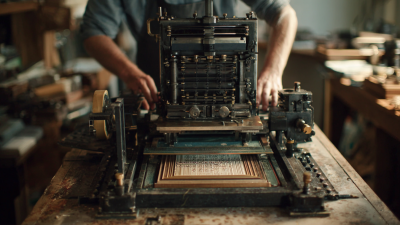
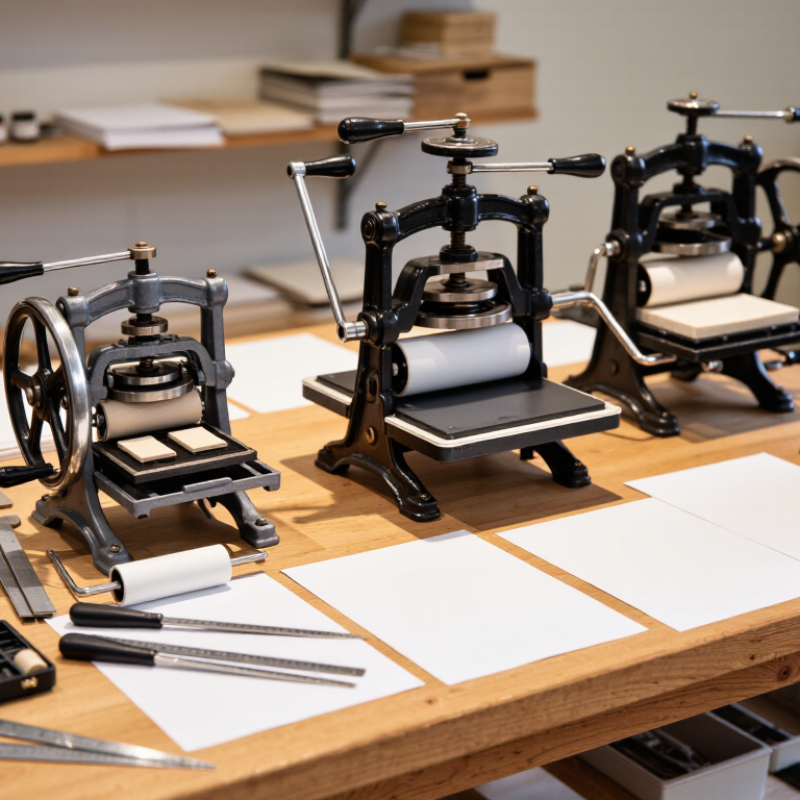
Tabletop Letterpresses differ mainly in how they apply pressure and handle the type. A platen press brings two flat surfaces together, much like closing a book. Its compact bed works well for small cards, labels, and short text. Pressure can vary across a larger design, though, especially when the press is not carefully packed. Tiny adjustments matter.
A tabletop cylinder, or roller, press moves the type bed beneath a rotating cylinder. The rolling contact can give a more even impression across longer lines. It is often suited to proofing and modest print runs, but feeding sheets takes practice. A paper edge that sits slightly crooked may shift the image. Not ideal.
Some small presses are hand-lever models, while others use a crank or flywheel to drive the impression. These controls affect the feel and pace of printing, not just convenience. Before choosing, check the usable bed and chase size against your actual type and paper. A press may look generous on a bench, yet leave little room for grippers or margins. I would also test a few sheets; specifications rarely show how forgiving a press feels in use.
Compare Press Size, Build Quality, and Ease of Use
Choosing a tabletop press starts with the size of the work you actually print. Measure your largest planned sheet, then allow room for the paper to sit squarely on the bed. A compact press saves bench space and suits small cards or labels. But a bed that is too small can limit future projects. Bigger is not always better. A larger press may need more room and steadier handling.
Build quality affects consistency. Check that the frame feels rigid, the platen closes evenly, and the moving parts do not wobble under light pressure. These details help produce clearer impressions across a page. For Letterpress Printing, even pressure matters more than an impressive finish. Ask how the press is adjusted and whether replacement parts are available. Ease of use matters, too. Look for controls you can reach without shifting the paper, plus a setup process you can repeat. If possible, test a short run: notice how much effort the handle takes and whether alignment drifts. A press can look sturdy in a photo and still feel awkward at your bench. I would leave room for that uncertainty when comparing models.
Evaluate Printing Capacity and Compatible Materials
A Tabletop Letterpress should match the size and quantity of work you actually print. Check the printable area against your largest design, allowing room for grippers and margins. Then estimate your typical run. A small press may handle invitations or short stationery batches comfortably, but repeated heavy impressions can slow production. Ask how quickly the press can be fed and adjusted, not just how much paper fits on its bed. Those details matter. I once underestimated setup time; the press was capable, but the job still took longer than expected.
Tips: Test your intended paper before buying. Bring a few sheets in different weights, and inspect the impression, registration, and feeding. Keep notes. A sample on smooth stock does not prove that textured paper will behave the same way.
Confirm which materials the press can safely accommodate. Paper thickness, surface texture, and sheet size all affect feeding and impression quality. Some machines work best with light, uncoated sheets; others can handle heavier stock when properly adjusted. Verify the maximum sheet thickness in the operating guide, and ask whether the platen pressure can be adjusted. If you plan to print envelopes, tags, or folded cards, test their shape and stiffness too. Leave room for mistakes: handmade stock can vary from sheet to sheet, and a test run may reveal uneven pressure or ink coverage.
Check Included Accessories and Availability of Supplies
Before buying a Letterpress Press, check exactly what arrives in the box. A chase, platen packing, gauge pins, and basic tools can make setup easier. Confirm whether rollers, ink discs, composing sticks, and type are included or sold separately. Small omissions matter. A missing packing sheet can delay your first proof, even when the press itself is ready.
Check that replacement rollers, packing, suitable paper, and compatible type are available in practical quantities. Ask suppliers about dimensions, restocking times, and whether parts fit that specific press model. “Available” may mean a long wait. Request a written accessory list and price common consumables before comparing machines. If possible, test a sample impression using the paper and ink you expect to use; pressure and paper thickness affect the result.
The U.S. Bureau of Labor Statistics’ Occupational Outlook Handbook projects printing-worker employment to decline 14% from 2022 to 2032, with about 15,000 openings annually. This covers printing occupations broadly, not Tabletop Letterpress demand, but it underscores the value of preserving practical skills and planning for maintenance. A checklist helps, though it cannot predict every supply delay. I would still leave room in the budget for one overlooked item.
Compare Total Cost, Maintenance, and Manufacturer Support
A Tabletop Letterpress’s purchase price is only the entry point. Compare platen size, included chase, rollers, freight, setup, and replacement parts before deciding. The U.S. Energy Information Administration reported an average commercial electricity price of12.75 cents per kilowatt-hour in 2023. Powered accessories add a recurring cost, though operator time and consumables may matter more on a manual press. Small costs accumulate.
Maintenance affects the real total. Ask how often rollers, bearings, and springs need inspection, which parts are standard, and whether adjustment instructions are available. The U.S. Bureau of Labor Statistics reported a median annual wage of $63,510 for industrial machinery mechanics in May 2023. That is not a press-repair quote, but it shows why service labor can outweigh an inexpensive part. Request written details on parts availability, response times, setup help, and warranty exclusions. I would price a full year of upkeep, not just an optimistic first month.
Tips: Request a parts list and maintenance schedule before buying. Add consumables, freight, downtime, and service labor to a three-year estimate. Compare the total, then ask who handles technical questions after delivery.
Match Press Features to Your Budget and Skill Level
A Tabletop Letterpress should fit the work you actually plan to print, not an imagined future studio. Start with paper. A press with a firm, adjustable platen can make it easier to achieve even impressions, especially when printing small cards or short runs. Check how the press adjusts, how securely it holds type, and whether replacement parts are available. These details affect daily use more than a polished finish or impressive weight.
Set a budget that includes more than the press itself. Type, tools, paper, ink, and cleaning supplies add up. A simpler manual model may suit beginners learning to lock up type and control pressure. It can also teach patience. More adjustment options may help experienced printers handle varied projects, but they bring a learning curve and extra setup. Ask sellers for clear photos of the printing surface and moving parts, and test a used press if possible. A tiny flaw can leave a pale streak across every sheet.
Match features to your available space and skill. Measure the press, then leave room for paper and tools nearby. If you are new, choose controls you can understand and adjust consistently. Experienced users may value a wider chase or finer pressure control. Still, no feature guarantees good impressions; paper thickness, packing, and careful setup matter too. A checklist can miss something. That is worth admitting before spending your whole budget.
Conclusion
Choosing the best Tabletop Letterpress starts with understanding what you plan to print and how much workspace you have. Consider whether you need a press for occasional creative projects or frequent production, then compare the main press types, printing area, construction, and ease of operation. A compact model may suit a small studio, while a sturdier press can offer greater stability and more consistent results.
Before deciding, check the press’s printing capacity and the materials it can handle, along with which accessories are included and how easy it is to find compatible supplies. Compare the full cost of ownership, including maintenance, replacement parts, and available manufacturer support. Finally, match the press’s features to your budget and experience level. A well-chosen press should fit your workspace, support the projects you want to make, and feel manageable as your skills develop.

 Contact immediately

 Contact Phone
 Contact Email