inquiry
Leave Your Message
0%

So, picking the best Paper Rewinding Machine? It’s not just about finding the fastest model out there. You’ve really got to look at paper grades, roll dimensions, production targets, and what your workplace is actually like. A machine that runs great with lightweight tissue might struggle with coated paper or thick board. The little details matter.

As paper-converting engineer Michael R. Turner puts it, “A rewinder should be chosen around the finished roll, not the machine brochure.” That’s a pretty practical way to think about it. Operators need stable web tension, accurate slitting, reliable shaft design, and controls that aren’t a pain to set up. In real production, even a small tension error can cause telescoping rolls, loose edges, or visible wrinkles. Those defects waste material—and they slow the whole line down.

Speed looks impressive. Consistency pays the bills.

Buyers should also check splice handling, automation, maintenance access, energy use, and the technical support that comes with the machine. Ask for production samples using your actual paper. Watch how it behaves during acceleration, stopping, and roll changeovers. A supplier’s demo may look perfect, but daily production can reveal some uncomfortable weaknesses.

Then there’s cost, which deserves an honest look. The cheapest Paper Rewinding Machine might bring more waste, longer setup times, and frequent maintenance. Still, the most expensive model isn’t automatically the best choice. Your product mix, your operators’ experience, your factory layout, and future capacity should all guide the decision. A careful comparison turns technical specs into practical value.
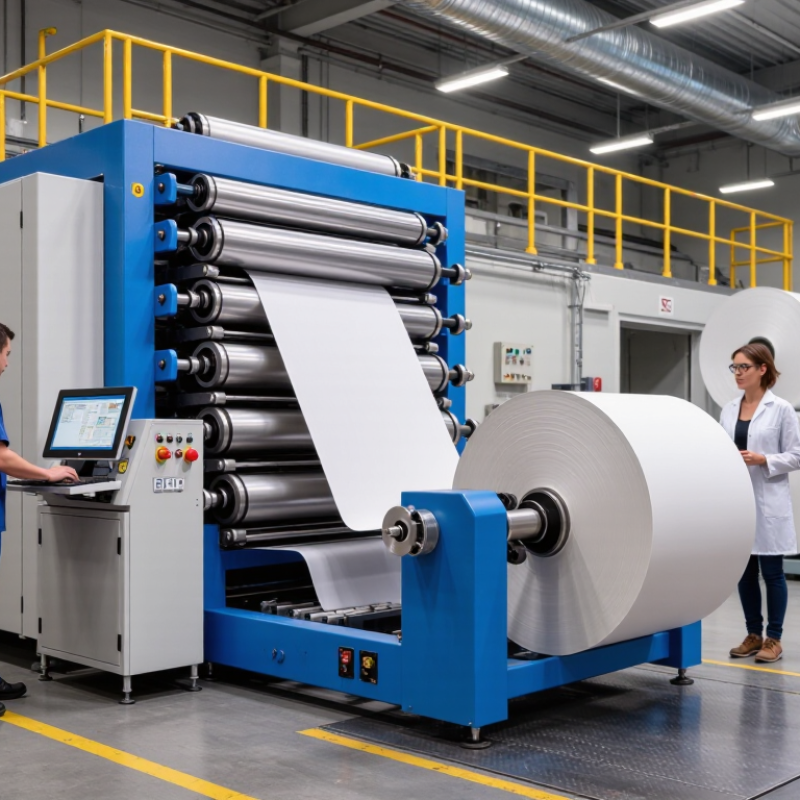
How to Choose the Best Paper Rewinding Machine?

Assess Paper Grades and Web Properties: 30–300 g/m² GSM and 4–8% Moisture

How to Choose the Best Paper Rewinding Machine?

Choosing a Paper Rewinding Machine starts with the paper, not the machine’s advertised speed. The critical range may run from 30–300 g/m² GSM, covering delicate tissue, coated stock, and heavier board-like grades. Each grade changes web strength, stiffness, dust level, and sensitivity to tension. A 30 g/m² web can tear during acceleration, while a 300 g/m² sheet may resist tight winding. Specify an adjustable unwind brake, responsive tension control, and a nip system suited to the intended roll hardness. Do not trust a single test roll. Inspect edges, telescoping, wrinkles, and core compression after storage.

Moisture deserves equal attention. Paper between 4% and 8% moisture can behave very differently across that range. At the lower end, static, brittleness, and edge cracking may increase. At the higher end, sheets may soften, stretch, or develop loose roll edges. Measure moisture across the reel, not only near its label. Record room temperature and relative humidity during trials. Web width, roll diameter, basis weight, and coating friction should be tested together. I have seen operators reduce tension to solve wrinkles, then create soft, unstable rolls. That fix was incomplete. A better trial changes one setting at a time and records the result. Still, paper is inconsistent. Allow fine adjustment in speed, tension, slitting pressure, and winding torque. Ask for documented test conditions, safety controls, maintenance access, and measured output quality before purchase.

How to Choose the Best Paper Rewinding Machine? - Assess Paper Grades and Web Properties: 30–300 g/m² GSM and 4–8% Moisture

Paper Grade Typical GSM
(g/m²)
Typical Moisture
(% by mass)
Web Characteristics Recommended Machine Configuration Tension and Control Priority Slitting Recommendation Main Rewinding Risk
Lightweight Tissue 30–45 5–8 Very low stiffness, highly extensible, porous, and sensitive to wrinkles and edge damage. Low-tension rewinder with sensitive load-cell feedback, soft winding pressure, and strong web spreading control. Very low tension
Use fast response to prevent web breaks.
Sharp razor or shear blades with minimal penetration and precise blade positioning. Wrinkles, telescoping, crushed cores, and web breaks caused by excessive tension or nip pressure.
Newsprint 42–52 5–7 Low caliper and moderate strength; porous surface with a tendency to generate dust. High-speed rewinder with reliable dust extraction, stable core chucks, and automatic splice handling. Low to medium tension
Maintain stable draw across the full roll width.
Shear slitting is generally suitable; keep blades clean to limit dust and rough edges. Dust accumulation, uneven edges, loose rolls, and breaks during acceleration or deceleration.
Uncoated Printing and Writing Paper 60–120 4–7 Moderate stiffness and strength; usually dimensionally stable when moisture is uniform. Center-winding or center-surface rewinder with automatic tension taper and edge guiding. Medium tension
Use taper tension to reduce core crushing and roll hardness variation.
Razor or shear slitting, selected according to coating, speed, and required edge quality. Hard or soft spots, core deformation, and reel deformation from incorrect taper settings.
Coated Printing Paper 90–170 4–6 Smoother, less porous surface; coating can be sensitive to scratching, blocking, and surface pressure. Surface-protection system, clean web path, accurate edge guiding, and controlled nip pressure. Medium, highly uniform tension
Avoid sudden tension changes and excessive nip loading.
Use clean, accurately aligned shear blades to minimize coating chips and edge burrs. Scuffing, coating damage, blocking, and roll slippage caused by excessive pressure or heat.
Kraft and Packaging Paper 80–200 5–8 High tensile strength with variable stiffness; heavier grades require greater torque and robust cores. Heavy-duty rewinder with high-torque drives, reinforced chucks, robust shafting, and strong edge control. Medium to high tension
Control torque as roll diameter and mass increase.
Shear slitting is preferred for clean edges; verify blade strength for dense grades. Core slipping, roll starring, edge cracking, and drive overload during acceleration.
Release Liner and Silicone-Coated Paper 40–180 4–6 Low-friction coated surface; sensitive to scratches, blocking, and changes in winding friction. Low-contact web path, polished rollers, precise tension control, and controlled winding hardness. Low to medium tension
Prevent slip without compressing or marking the coating.
Use precision shear slitting with clean blades and accurate overlap control where applicable. Surface scratches, telescoping, blocking, and unstable rolls caused by low friction.
Paperboard and Folding Boxboard 180–300 5–8 High caliper, stiffness, and roll mass; requires strong mechanical support and accurate alignment. Heavy-duty slitter-rewinder with high torque, rigid frames, large-capacity shafts, and strong braking capability. Medium to high tension
Use gradual acceleration and sufficient torque reserve.
Heavy-duty shear knives with rigid holders; verify maximum slit width and blade load. Edge cracking, core collapse, roll deformation, and excessive vibration from unbalanced rolls.
Selection note: The ranges above are typical operating references rather than universal specifications. Actual machine settings should be confirmed through the paper supplier’s technical data, including tensile strength, caliper, roll diameter, core dimensions, coefficient of friction, and cross-direction moisture uniformity. Moisture should be measured at the rewinder inlet because uneven moisture across the web can cause curl, wrinkles, and telescoping even when the average value is within range.

Set Output Targets: 1,000–3,000 mm Web Width and Up to 2,000 m/min

Choosing the best Paper Slitting And Rewinding Machine starts with a measurable output target. A 1,000–3,000 mm web width range covers many packaging, tissue, and printing applications. Wider webs can reduce changeover frequency, but they demand stronger tension control and more stable alignment. Measure your parent-roll width carefully.

Speed needs equal discipline. A machine rated for up to 2,000 m/min sounds impressive, yet maximum speed is not always productive speed. Film thickness, paper grade, moisture, roll diameter, and splice quality can reduce the practical rate. Test the machine with your actual material. A clean 1,600 m/min run may outperform repeated stops at 2,000 m/min.

The scale of the industry supports careful capacity planning. FAO data reported global paper and paperboard production above 400 million tonnes in 2022. CEPI reported European paper and board production at about 79 million tonnes in 2023. These figures show demand remains substantial, but they do not justify buying excess capacity. Review hourly output, waste percentage, roll hardness, and operator workload. Keep a margin.

A common mistake is trusting the brochure. Inspect acceleration behavior, edge trimming, dust control, and finished-roll consistency. Ask for documented trial results, not optimistic claims. Your target might be 1,000 mm width and 1,200 m/min today, with room to reach 3,000 mm and 2,000 m/min later. That flexibility may matter more than headline speed.

How to Choose the Best Paper Rewinding Machine?

Set output targets: 1,000–3,000 mm web width and up to 2,000 m/min.

The chart compares practical specification checkpoints for paper rewinding equipment. Wider webs generally require higher machine rigidity and tension-control capability, while speeds near 2,000 m/min demand advanced automation, accurate slitting, and stable roll handling. Actual output depends on paper grade, basis weight, roll diameter, slit width, and operating conditions.

Select Rewinding Technology: Slitter, Center, Surface, or Center-Surface

Choosing the best Paper Rewinding Machine starts with the rewinding technology, not the machine’s advertised speed. A slitter rewinder cuts and rewinds several rolls in one pass. It works well for converting wide parent rolls into narrow customer widths. Check knife accuracy, web guidance, and dust control carefully. Small cutting errors can create loose edges and customer complaints.

Center winding applies torque through the core. It handles many paper grades and gives operators precise tension control. This method suits lightweight papers that may wrinkle under excessive surface pressure. Surface winding transfers drive through the roll surface. It is useful for firm rolls, higher speeds, and stable web conditions. However, poor nip pressure can crush edges or create telescoping. The correct setting is rarely obvious.

Center-surface winding combines core torque with drum contact. It offers stronger control when roll diameter, moisture, or paper density changes during production. Plant trials should measure roll hardness, edge quality, tension variation, and finished diameter. Ask operators to inspect the first and last rolls, not only the middle ones. A machine that performs beautifully on one paper grade may struggle on another. No selection is perfect. I would leave room for adjustment, because real paper often behaves differently than laboratory samples. Check maintenance access, sensor calibration, and safety interlocks before approving the final configuration.

Specify Roll Quality: 3- or 6-Inch Cores and Up to 1,500 mm Diameter

How to Choose the Best Paper Rewinding Machine?

Roll quality starts with the core, not the machine name. A Rewinding Machine should support both 3-inch and 6-inch cores when production orders vary. Core selection affects shaft fit, winding stability, and finished roll handling. Check the chuck design carefully. Loose core contact can create telescoping edges or uneven tension.

A maximum diameter of 1,500 mm requires more than a large frame. The machine needs controlled web tension, accurate edge alignment, and sufficient reel support. Large rolls become heavy quickly. Their outer layers can also loosen if acceleration is too aggressive. In practical trials, measure roll hardness across the width, not only at the center. Inspect the edges under clear lighting. Small wrinkles often reveal poor tension control.

Operator experience still matters. Ask for test rewinding with your actual paper grades, widths, and core sizes. Record speed, tension settings, roll weight, and defect rates. Do not rely on a brochure alone. It may describe ideal conditions. Your paper may behave differently. Dust, moisture, and changing basis weight can alter the result. A machine that handles 3-inch cores smoothly may need different settings for 6-inch cores. That detail is easy to miss. Review maintenance access, safety guarding, and measurement accuracy before purchase. Reliable records make later adjustments less subjective.

Evaluate Control Precision: ±1% Tension Stability and Automatic Defect Detection

How to Choose the Best Paper Rewinding Machine?

A reliable Slitting Rewinding Machine should control web tension within ±1% during acceleration, steady running, and roll changes. This figure is not just a brochure claim. Ask for recorded tension curves from comparable paper grades and production speeds. Small drift matters. Even a brief tension spike can create wrinkles, telescoping edges, or loose roll cores.

Automatic defect detection adds another layer of process control. The system should identify holes, stains, broken fibers, and edge damage while the web moves at full speed. Check the camera resolution, lighting stability, detection response time, and alarm records. A practical trial should include printed marks, faint discoloration, and defects near the edge. Detection is not enough. The machine must also mark or stop at the correct position.

Operators should be able to review defect images and adjust sensitivity without complicated menus. Clear trend charts help technicians connect tension changes with roll hardness and paper moisture. I would also inspect the machine during a long run, not only during a polished demonstration. Performance can change after several hours. That is where honest evaluation begins. A ±1% result may depend on paper width, reel diameter, and environmental conditions, so suppliers should state these limits clearly. Sometimes, the “best” machine is not the fastest one. It is the one that produces stable rolls, records useful evidence, and gives operators enough control to correct small problems early.

Check Safety, Energy, and ROI: CE, ISO 12100, kWh/t, and Payback Period

How to Choose the Best Paper Rewinding Machine?

Safety should be checked before speed. A Slitting And Rewinding Machine should include documented risk assessment under ISO 12100. Guards, emergency stops, safe access, and stored-energy controls need physical verification. CE marking shows conformity with applicable European requirements, but it is not a performance certificate. Request the technical file, declaration of conformity, and safety validation records. Do not accept a logo alone.

Energy data must be measured at production conditions. Ask for kWh per tonne at stated web width, paper grade, speed, and roll diameter. The International Energy Agency reported that industry consumed about 37% of global final energy in its Energy Efficiency 2023 analysis. Even a small reduction matters when the machine runs continuously. Check motor efficiency, standby consumption, compressed-air demand, and heat from braking systems. Meter readings are stronger than sales estimates.

Calculate payback with verified savings, added output, maintenance, and downtime. The formula is simple: investment divided by annual net benefit. A lower-priced machine may lose money through trim waste or unstable tension. In audits, operators often reveal the real cost. That detail is easy to miss. I would also test the calculation with slower production weeks; optimistic assumptions can mislead. Data from the U.S. Department of Energy supports measuring energy performance under actual operating conditions, not brochure conditions. A two-year payback looks attractive, but only when availability and product quality remain stable.

FAQS

What should guide the choice of a paper Rewinding Machine?

Choose the rewinding technology before comparing advertised speed. Match the method to paper grade, roll width, diameter, and production conditions. Speed alone can mislead.

When is slitter rewinding a suitable option?

Slitter rewinding converts wide parent rolls into several narrower rolls in one pass. Check knife accuracy, web guidance, and dust control. Tiny cuts matter.

What papers suit center winding?

Center winding applies torque through the core. It offers precise tension control for lightweight papers that may wrinkle under surface pressure. Test the actual grade.

When can surface winding work well?

Surface winding suits firm rolls, higher speeds, and stable web conditions. Incorrect nip pressure may crush edges or cause telescoping. The setting is not always obvious.

Why consider center-surface winding?

It combines core torque with drum contact. This helps manage changing roll diameter, moisture, and paper density. It may provide steadier control.

What tests should be completed before approving a machine?

Rewind actual paper grades, widths, and core sizes. Measure roll hardness, edge quality, tension variation, finished diameter, and defect rates. Inspect the first and last rolls.

Can one machine support different core sizes?

A suitable machine should support both 3-inch and 6-inch cores when orders vary. Check chuck fit and shaft stability carefully. Small gaps cause trouble.

What should be checked for rolls up to 1,500 mm?

Confirm accurate edge alignment, controlled tension, and adequate reel support. Large rolls become heavy quickly. Measure hardness across the width, not only at the center.

Which operating details are easy to overlook?

Record speed, tension settings, roll weight, moisture, and defect rates during trials. Review maintenance access, sensor calibration, guarding, and safety interlocks. Stay skeptical.

Is the best configuration always clear from test results?

No configuration is perfect. Laboratory samples may behave better than production paper. Leave room for adjustment, because real paper can wrinkle, loosen, or telescope.

Conclusion

Choosing the right Paper Rewinding Machine begins with matching its design to the paper being processed. Evaluate paper grades, GSM values from 30 to 300 g/m², and moisture levels between 4% and 8% to ensure stable running and consistent roll formation. Define production goals carefully, including web widths of 1,000–3,000 mm and line speeds of up to 2,000 m/min. The required rewinding method—slitter, center, surface, or center-surface—should reflect the paper type, roll structure, and finishing requirements.

Roll specifications are equally important. Confirm compatibility with 3- or 6-inch cores and target roll diameters up to 1,500 mm. Advanced control systems should maintain tension stability within ±1% and support automatic defect detection for reliable quality control. Finally, review safety certifications, energy consumption in kWh per ton, maintenance needs, and the expected payback period. A well-balanced evaluation helps manufacturers select equipment that improves productivity, reduces waste, protects operators, and delivers long-term economic value.

Ethan

Ethan

Ethan is a dedicated marketing professional at Jinyuan Mechanical, a leading provider of slitting and rewinding equipment solutions. With a deep expertise in the company's product offerings, he plays a pivotal role in bridging the gap between technology and customer needs. Ethan is committed to......
Previous 7 Best Printing Machines for Global Buyers in 2026