Contact immediately
Leave Your Message
- Contact WhatsApp

-
 Contact Phone
-
 Contact Email
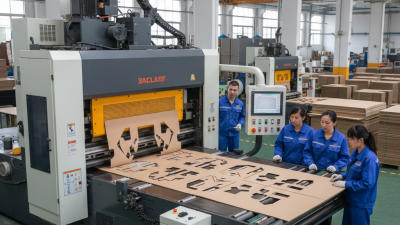
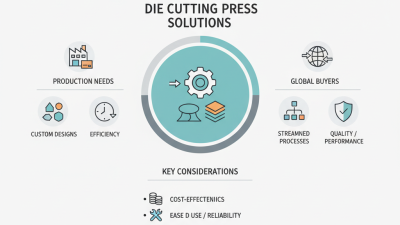
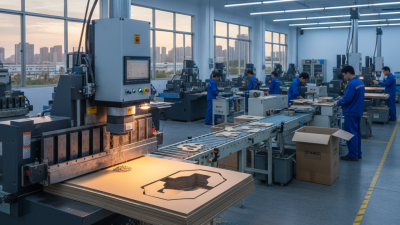
Picking out a Die Cutting Press isn't just about comparing brands — it’s more of a practical decision. For buyers around the world, it’s really about matching the machine’s capabilities with your substrates, how much you’re producing, your tooling needs, and the local support you can get. A press that works perfectly for folding cartons might not handle thick corrugated board or delicate labels so well. Little things matter a lot — like how stable the feeder is, how precise the stripping, how quick it is to switch over, and how easy it is for operators to access all parts.
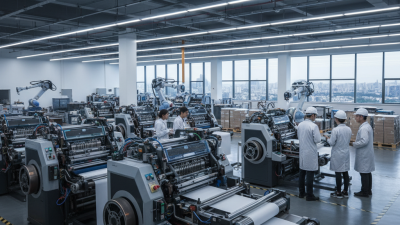
In this guide, we look at some of the top manufacturers — Bobst, Heidelberg, Koenig & Bauer, Masterwork, and Young Shin. We take into account how fast they can produce, maximum sheet sizes, automation levels, energy efficiency, safety features, and after-sales support. Jean-Pascal Bobst, the CEO of Bobst, famously said, “Innovation is not an option; it is a necessity.” That mindset still holds true for anyone comparing modern die Cutting Machines. But here’s the thing: innovation should really solve actual production challenges. Sometimes adding more automation just adds extra costs, especially if your plant doesn’t have trained technicians or a solid maintenance plan.
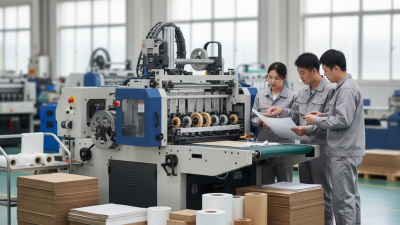
If you’re serious about making the right choice, your buying process should include factory demos, sample trials, and clear, written performance specs. Ask manufacturers to test your actual materials — whether it’s board, paper, or specialty stuff. Watch out for waste, setup time, noise levels, and how consistent the final product is. Don’t just go by brochure speeds — they can look really good on paper but might not be the real deal.
No ranking is perfect, though. Things like regional conditions, import taxes, spare parts availability, and your team’s experience can all influence what’s best for you. So, this overview is meant to focus on honest, practical info and long-term value. It’s here to help converters, packaging firms, and industrial buyers get a clearer shortlist before requesting formal quotes. Remember — the fastest machine isn’t always the best. Sometimes, it’s the one that performs reliably in your actual production environment that counts the most.
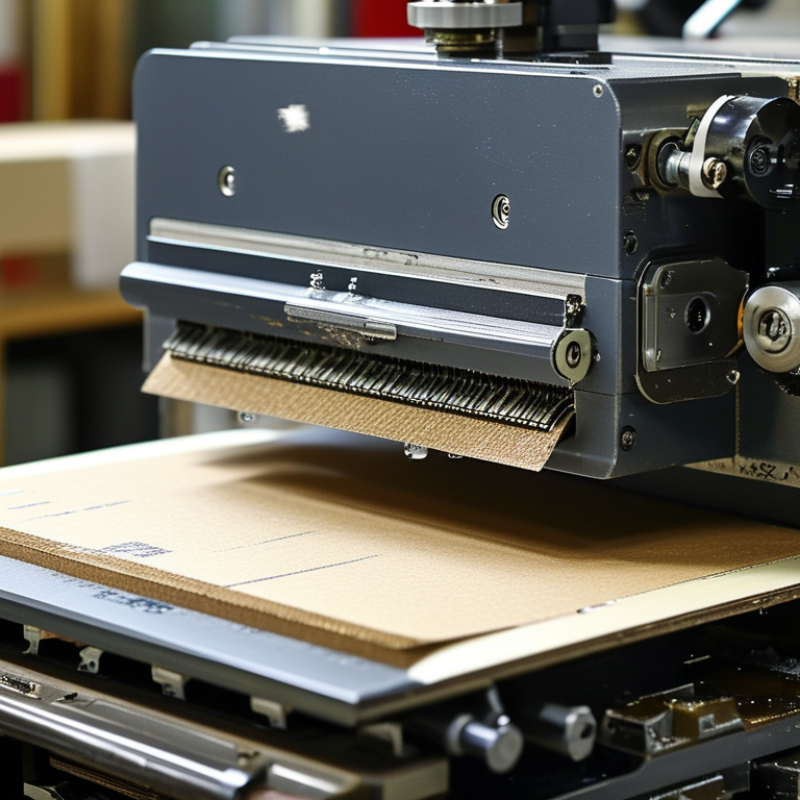
For global buyers, selecting a Die Cutting Press Machine starts with the material, not the machine name. Flatbed presses suit short runs, thick board, and precise prototypes. A rigid carton sheet can be positioned against a steel-rule die, then cut with controlled pressure. This method is slower, but setup changes are usually straightforward.
Rotary die-Cutting Presses use cylindrical dies and continuous web feeding. They support higher speeds for labels, flexible packaging, and long production runs. Platen presses apply force between two flat surfaces. They remain useful for folding cartons, foam, leather, and heavier substrates. According to Smithers’ The Future of Global Packaging to 2028, worldwide packaging demand is projected to exceed 1.2 trillion dollars by 2028. That growth increases pressure for faster changeovers and lower material waste.
Watch the details. A rotary line may reduce waste, yet its tooling can cost more. Flatbed tooling often feels easier to manage for regional production. It depends. Operators should check maximum sheet size, cutting force, registration accuracy, noise levels, and service access. A 0.2-millimeter registration error can visibly spoil small carton windows. This is often underestimated. My practical judgment may be incomplete because substrate behavior changes with humidity, coating, and recycled fiber content. Trial runs using the buyer’s actual stock remain essential before approving the press.
| Evaluation Dimension | Flatbed Die-Cutting Press | Rotary Die-Cutting Press | Platen Die-Cutting Press |
|---|---|---|---|
| Operating principle | A flat forme moves vertically against a stationary or intermittently fed sheet or web. | A cylindrical engraved or magnetic die rotates continuously against a counter-cylinder or anvil. | A hinged or vertical platen applies pressure to a flat die and the substrate. |
| Typical material format | Sheet-fed board, paper, labels, corrugated board, foam, gasket materials, and thin plastics. | Continuous rolls or webs of labels, flexible packaging films, adhesive materials, paper, foil, and thin laminates. | Individual sheets, blanks, boards, leather, rubber, textiles, foam, and other compressible or semi-rigid materials. |
| Indicative production speed | Approximately 1,500–8,000 sheets or cycles per hour, depending on format, material, and stripping requirements. | Approximately 20–150 m/min for many label and web-converting applications; higher speeds are possible in specialized lines. | Approximately 500–5,000 cycles per hour, depending on press size, stroke, feeding method, and product geometry. |
| Cutting accuracy | High accuracy for registered sheet work; commonly selected for folding cartons and complex layouts. | High repeatability during continuous web production; registration depends on web tension and control systems. | Good accuracy for flat blanks and individual parts; consistency depends strongly on manual or automatic feeding. |
| Tooling configuration | Flat cutting formes made from plywood or comparable base materials with rule knives, creasing rules, and ejection components. | Rotary dies, magnetic cylinders, anvil cylinders, and interchangeable tooling sleeves. | Flat dies, steel-rule dies, clicker dies, or specialized cutting plates mounted to the platen. |
| Changeover suitability | Well suited to varied job sizes and short-to-medium production runs; tooling changes are generally practical. | Best suited to repeat orders and longer runs where continuous production offsets rotary-tooling costs. | Suitable for frequent changes and prototypes, particularly when simple flat dies are used. |
| Common finishing operations | Die Cutting, creasing, perforating, embossing, stripping, blank separation, and waste removal. | Die Cutting, kiss cutting, perforating, slitting, laminating, varnishing, and matrix waste removal. | Cutting, punching, creasing, embossing, and simple forming operations. |
| Typical product applications | Folding cartons, specialty packaging, corrugated inserts, presentation folders, and commercial print products. | Pressure-sensitive labels, flexible packaging components, tapes, medical disposables, and narrow-web products. | Footwear parts, gaskets, foam components, leather goods, textile parts, small packaging blanks, and prototypes. |
| Key advantages | Flexible format range, strong cutting force, precise registration, and broad compatibility with printed sheets and boards. | Continuous operation, low material interruption, high throughput, and efficient production of repeated web designs. | Simple mechanical concept, adaptable tooling, strong point pressure, and suitability for diverse materials. |
| Main limitations | Generally slower than continuous rotary systems and may require additional stripping or blank-separation equipment. | Rotary tooling can be costly, and format changes may be less economical for short runs or highly variable jobs. | Lower automation and throughput on many configurations; feeding and unloading can require more labor. |
| Best choice for global buyers seeking | Versatile sheet-fed production with multiple product sizes and complex cut-and-crease layouts. | High-volume continuous web converting with stable repeat designs and automated inline processes. | Flexible low-to-medium-volume cutting, specialty materials, sampling, and applications requiring concentrated force. |
| Important purchasing checks | Maximum sheet size, minimum sheet size, cutting force, feeder type, stripping capability, register tolerance, and available service support. | Maximum web width, repeat length, line speed, web-tension control, die-cylinder availability, waste matrix handling, and substrate compatibility. | Maximum cutting area, platen pressure, stroke rate, die height, operator safety systems, automation level, and replacement-part availability. |
Note: Production figures are indicative industry ranges rather than guaranteed machine ratings. Actual performance varies with press format, material thickness, die layout, feeding method, registration requirements, and finishing operations.
The global paper-packaging market is expanding as e-commerce, food delivery, and sustainable product design increase demand for paper-based materials. Grand View Research estimates that the market was valued at approximately **US$427.37 billion in 2023** and projects a compound annual growth rate of about **3.9% from 2024 to 2030**. Meanwhile, Smithers’ industry outlook highlights continued investment in recyclable packaging, lightweight structures, and production automation. These trends are strengthening demand for reliable paper cores used in film, foil, labels, tissue, and flexible packaging applications.
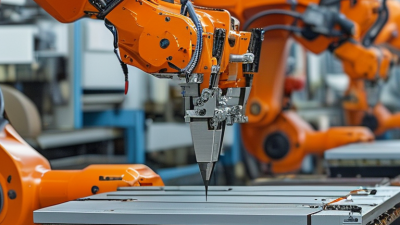
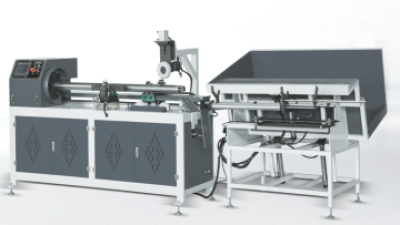
A fully automatic paper core cutting machine can help manufacturers respond to this growth with greater speed and consistency. Manufactured in China, the system combines advanced servo motor technology with PLC control to coordinate paper-core feeding, positioning, cutting, and discharging. Its touch-screen interface supports straightforward parameter adjustment, while automated operation reduces manual handling, material waste, and variation between batches. Designed for modern converting plants, the machine delivers precise core lengths and stable production performance across different orders. As packaging producers pursue higher output and more efficient workflows, integrated cutting equipment offers a practical way to improve productivity while maintaining dependable quality.
: Start with the material and production volume. Thick board often suits flatbed or platen equipment. Labels and flexible packaging may need rotary processing. Actual trials are still essential.
Flatbed presses suit short runs, prototypes, and rigid sheets. Operators can reposition steel-rule dies relatively easily. The process is slower than rotary cutting. That trade-off may be acceptable.
Platen presses handle folding cartons, foam, leather, and heavy substrates. They apply force between two flat surfaces. This action supports firm, controlled cutting. Material thickness still requires testing.
Rotary presses use cylindrical dies and continuous web feeding. They support fast production for labels and flexible packaging. Tooling costs can be higher. Waste reduction does not guarantee lower total costs.
Check sheet size, cutting force, registration accuracy, noise, and service access. A 0.2-millimeter registration error can spoil a small carton window. Ask for verified cycle-time data. Catalog specifications can hide downtime.
Large factories may benefit from automatic stripping, inline inspection, and servo-driven movement. Smaller producers may prefer flexible formats and easier changeovers. A 300-ton press can still underperform. Setup waste may consume its advantage.
Training affects alignment speed, quality, and daily output. A powerful press loses value when setup takes forty minutes. Practical training should include die adjustment and fault recovery. This factor is often underestimated.
Humidity, coatings, and recycled fibers can change cutting behavior. Use the buyer’s actual stock during trial runs. Inspect edges, windows, waste, and registration. My judgment may be incomplete without those tests.
Compare service access, delivery time, automation, customization, and maintenance records. Some suppliers emphasize precision and safety documentation. Others focus on throughput or flexible configurations. Regional strengths vary, so assumptions need checking.
Choosing the right Die Cutting Press requires a clear understanding of machine type, specifications, application, and long-term operating needs. Flatbed, rotary, and platen technologies serve different production goals, from precise sheet processing to high-speed continuous converting. Buyers should compare force capacities from 20 to 6,000 kN, output rates of 10 to 1,500 strokes per hour, registration accuracy around ±0.1 mm, and line speeds reaching 300 m/min. These factors help match equipment with materials, order volumes, automation levels, and required product consistency.
A complete evaluation should also consider regional manufacturing strengths, production scale, and target industries, while confirming compliance with CE, UL, ISO 9001, and applicable machine-guarding requirements. A practical buyer scorecard should include tooling flexibility, energy consumption, warranty terms, delivery lead time, operator training, spare-parts availability, and service response. Comparing these criteria systematically can help global buyers select reliable equipment that balances productivity, safety, total cost of ownership, and future expansion.