Contact immediately
Leave Your Message
- Contact WhatsApp
-
 Contact Phone
-
 Contact Email
In the fast-changing world of crafting and manufacturing, Die Cutting has really become a go-to technique for creating precise and detailed designs. I recently came across a report from Smithers Pira that predicts the global Die Cutting market is set to grow quite a bit—about 3.5% annually until 2026. As creativity and tech keep blending together, there’s a huge demand for methods that help crafters produce flawless, professional-looking results.
Experts like Dr. Emily Blake, who’s well-known in the Die Cutting scene, always stress how important it is to master these techniques if you want that polished finish. She’s quoted saying, 'In Die Cutting, precision is everything; the right technique can really make a difference in the final product.' That really highlights why reliable, innovative tools are so essential—especially ones that can meet the diverse needs of the craft community. Companies like Wenzhou Jinyuan Mechanical Technology Co., Ltd. are doing their part by developing user-friendly, stable equipment through detailed research and customization. They’re helping businesses hit their production targets while keeping quality right at the top of the list. Honestly, it’s pretty exciting to see how all this comes together, making life easier for crafters and manufacturers alike.

Die Cutting techniques are essential for achieving precise and intricate designs in crafting projects. These techniques, which include the use of steel-rule dies, laser cutting, and electronic Cutting Machines, enable crafters to produce consistent shapes and patterns that elevate their work. The right Die Cutting method can significantly enhancecreative flexibility, offering diverse options for both hobbyists and professional crafters. By understanding the fundamentals of these techniques, makers can maximize their efficiency and creativity.
At Wenzhou Jinyuan Mechanical Technology Co., Ltd., we recognize the importance of quality equipment in the crafting process. Our expertise in developing slitting and rewinding solutions is tailored to meet the specific needs of the crafting industry. We focus on providing stable and user-friendly systemsthat align with the production requirements of our clients, ensuring seamless integration and superior results in Die Cutting applications. This commitment to excellence empowers crafters to consistently achieve their desired designs while minimizing production challenges.
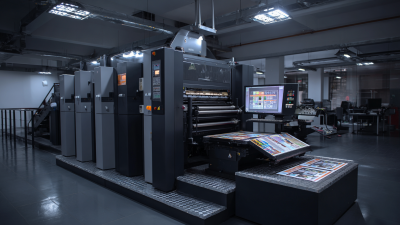
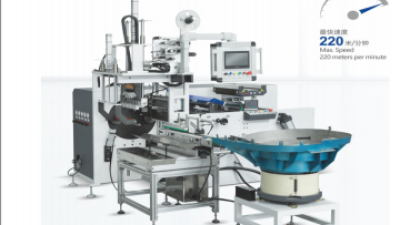
In today’s competitive manufacturing environment, optimizing production efficiency is paramount. Fully automatic cutting and dividing machines are revolutionizing the industry by integrating advanced technology to streamline operations. The latest models boast impressive capabilities, such as maximum speeds of 220m/min and the implementation of seven servo motors for precise control. These features not only enhance cutting quality but also significantly reduce operational downtime, resulting in higher output and lower production costs.
Incorporating automation in processes like auto paper core loading, cutting, labeling, and rewinding eliminates manual handling, which is often a source of errors and inefficiencies. With functionalities that support production without the need for glue on paper cores and the prevention of folding issues, these machines cater to the demand for high-quality products. Moreover, the built-in meter and quantity counters allow manufacturers to track their production in real-time, leading to smarter decision-making and better inventory management.
According to a recent industry report, companies leveraging fully automatic systems can achieve a productivity increase of up to 30%. This shift not only enhances product throughput but also meets the rising consumer expectations for quick and efficient service delivery. Consequently, investing in automatic cutting and dividing machines is becoming increasingly vital for manufacturers aiming to maintain a competitive edge in the evolving market landscape.
: Die cutting is a precise and efficient method used in crafting to produce intricate designs easily.
The main die cutting methods include flatbed die cutting, rotary die cutting, and digital die cutting, each with distinct advantages tailored to specific production needs.
Flatbed die cutting is ideal for smaller production runs and allows for sharp, detailed cuts.
Rotary die cutting is suited for larger volumes due to its continuous operation, making it efficient for high-output needs.
Digital die cutting offers unparalleled flexibility and customization, allowing crafters to experiment freely without the constraints of traditional methods.
Incorporating layering, adding embellishments like rhinestones or ribbons, and using ink or distressing tools around the edges can elevate your die cut designs.
Layering multiple die cuts creates depth and dimension, adding visual interest to your crafts.
Finishing touches such as rhinestones, pearls, or distressed edges can enhance the overall appearance and personal style of your die cuts.
Precision is crucial to ensure flawless results in crafting and to maintain consistent quality in the final designs.
The company offers adaptable slitting and rewinding equipment solutions focused on enhancing productivity and meeting unique crafting needs.
In "Top 5 Die Cutting Techniques for Crafting Perfect Designs Every Time," the article delves into the essential skills and methods needed for successful die cutting in crafting. It emphasizes the precision required in different die cutting methods, helping crafters select the best materials—specifically papers—that enhance die cutting results. Techniques for layering and adding dimension are discussed, allowing creators to develop more intricate designs. Additionally, the article provides valuable tips for applying finishing touches and troubleshooting common challenges faced in die cutting.
Wenzhou Jinyuan Mechanical Technology Co., Ltd. contributes to this crafting field by offering tailored slitting and rewinding equipment solutions that complement these die cutting techniques. Their expertise in customizing user-friendly systems ensures that crafters can achieve their design goals efficiently and effectively, embracing the art of die cutting in their creative processes.