
 Contact immediately



The Ultimate Guide to Slitting Thermal Paper, Coated Paper, and Biodegradable Films Corelessly: How Does a Coreless Automatic Slitter Rewinder Master Multi-Material Converting?
Published by: Wenzhou Jinyuan Mechanical Technology Co., Ltd. | Category: Converting Machinery & Industrial Automation | Reading Time: 12 mins
1. What Is a Coreless Automatic Slitter Rewinder and Why Is Material Adaptability Crucial for Converters?
In today's fast-moving paper, label, and packaging industries, flexibility is the ultimate competitive advantage. A high-efficiency Coreless Automatic Slitter Rewinderhas emerged as the gold standard for progressive converting operations worldwide. Traditional Slitting And Rewinding Machinery relies heavily on paper cores or plastic tubes to support web tension and maintain finished roll structure. However, as raw core material costs fluctuate and end-users demand sustainable, eco-friendly consumables, converting factories must pivot toward advanced coreless solutions.
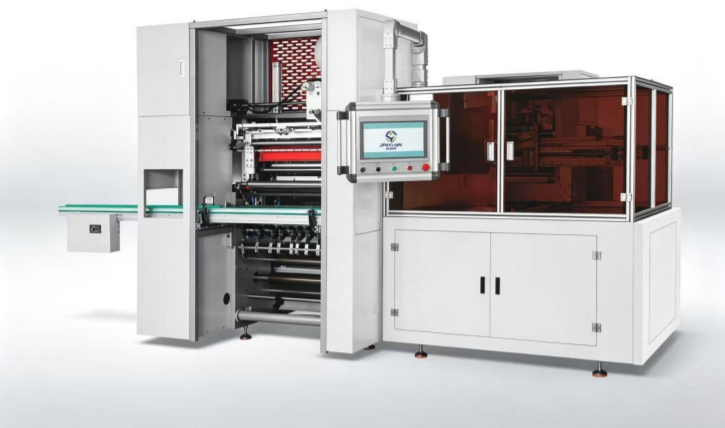
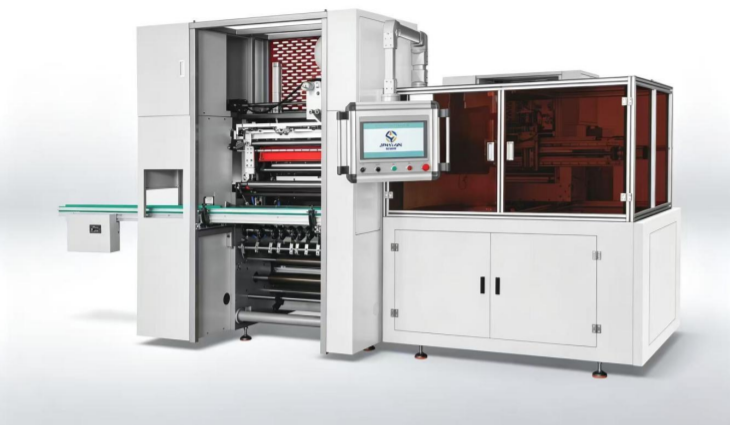
A modern Coreless Automatic Slitter Rewinder is an automated industrial machine engineered to take wide parent rolls (master rolls) of paper, self-adhesive stock, or flexible film, slitting them into specified narrower widths and rewinding them into tightly wound finished small rolls—completely without an inner plastic or cardboard tube. By using high-precision expanding mandrels, air-assisted stripping shafts, and intelligent closed-loop tension systems, the machine creates a firm, perfectly circular inner hole directly out of the substrate itself.
However, not all substrates behave the same way under slitting blades and rewinding shafts. Thermal paper is heat-sensitive and friction-prone; coated art paper is rigid yet susceptible to surface scratching; self-Adhesive Labels possess complex multi-layer pressure-sensitive adhesives that can bleed; and eco-friendly biodegradable films (such as PLA and PBAT) exhibit high elasticity, low thermal resistance, and variable elongation properties. For B2B packaging managers and contract converters, investing in a machine that possesses outstanding **material adaptability** is essential to handling shifting market demands without purchasing multiple specialized production lines.
2. Why Is Dual-Purpose Versatility (With Core & Without Core) the Smartest Investment Strategy for B2B Manufacturers?
Transitioning a production plant's customer base from traditional cored rolls to modern coreless rolls is rarely an overnight process. While forward-thinking supermarket chains, logistics centers, and eco-conscious retailers prefer coreless thermal rolls and eco-friendly film rolls, traditional clients may still require standard 0.5-inch or 1-inch paper core rolls for legacy POS equipment or manual dispensers.
This operational dilemma makes **Dual-Purpose Versatility (With Paper Core & Without Paper Core)** the single most vital feature when choosing a Coreless Automatic Slitter Rewinder.
A. Substantially Lowering Capital Investment Risk
Purchasing separate dedicated machinery for cored production and coreless production doubles capital expenditure (CapEx), wastes valuable plant floor space, and increases maintenance costs. A dual-purpose system allows converters to fulfill 100% of incoming market orders using a single capital asset, significantly shortening the payback period and protecting liquidity.
B. Rapid Seamless Mode Switching in Minutes
State-of-the-art dual-purpose machines engineered by industry leaders like Jinyuan Machinery allow operators to toggle between "With Core" and "Without Core" modes seamlessly. By simply changing the quick-release rewinding shaft or modifying pre-programmed parameters via the human-machine interface (HMI) touch panel, operators can change production setups within minutes:
- Coreless Mode: Uses specialized multi-segment pneumatic expandable spindles and auto-tuck flap mechanics to initiate coreless rewinding directly on the metal mandrel.
- Cored Mode: Engages standard pneumatic air shafts or core loaders, applying glue spray or tuck-in fingers to anchor paper cores securely for conventional output.
C. Future-Proofing Factory Operations Against Market Shifts
As global environmental regulations tighten and carbon offset mandates expand, coreless roll consumption is projected to grow exponentially over the next decade. Owning dual-purpose slitting and rewinding equipment empowers manufacturing plants to capture current cored market orders today while positioning themselves as first-movers for lucrative coreless contract manufacturing contracts tomorrow.
3. How Does Tension Control Vary When Slitting Thermal Paper, Coated Paper, Labels, and Biodegradable Films Corelessly?
Mastering coreless rewinding across diverse substrate categories requires a deep understanding of physical mechanics, surface friction, and tension dynamics. Without a rigid cardboard core to absorb radial forces, internal roll stress must be managed meticulously through real-time **tapered tension control** and precision nip roller force.
Below is a comprehensive technical analysis of how an advanced Coreless Automatic Slitter Rewinder adjusts tension mechanics across four major material groups:
1. Thermal Paper (Cash Register, POS, & Bank ATM Rolls)
Material Characteristics: Light-to-medium basis weight (48 gsm – 80 gsm), smooth surface finish, heat-sensitive chemical coating layer on one side, relatively rigid tensile strength along the machine direction (MD).
Coreless Tension Strategy:
- Initial Tight Tuck: In coreless mode, thermal paper requires a firm, high-tension initial revolution around the winding spindle to form a crisp, unyielding inner hole. If the initial tuck is too loose, the center of the finished POS roll will telescope or collapse upon shaft extraction.
- Linear Tapered Tension Decay: As the roll diameter increases toward the target size (e.g., 40mm, 50mm, or 80mm OD), tension must decay linearly by 15%–25%. This prevents internal heat generation from inter-layer friction, which could accidentally activate the thermal dye layer and turn the paper dark.
- Nip Pressure Control: Rubber-coated pneumatic rider rollers maintain constant contact pressure against the growing roll, driving out trapped air pockets to deliver flat, perfectly square roll edges.
2. Coated Paper & Art Paper (High-Grade Print & Plotter Rolls)
Material Characteristics: Medium-to-heavy basis weight (80 gsm – 150+ gsm), rigid structure, low elasticity, smooth mineral-coated surface susceptible to scratching or scuffing under excessive friction.
Coreless Tension Strategy:
- High Constant Web Tension: Due to the higher stiffness and thickness of coated paper, higher web tension is required throughout the slitting zone to maintain clean shear-blade engagement without burrs or dust.
- Controlled Shaft Expansion Force: The expanding elements on the coreless spindle must grip the heavy paper stock firmly without creasing or marking the inner layer.
- Gentle Taper Profile: A conservative taper curve (10%–15%) is applied, keeping the outer layers firm so the roll can withstand transport shock without inner telescoping.
3. Self-Adhesive Labels & Linerless Stock (Shipping & Barcode Labels)
Material Characteristics: Multi-layer composite structure (facestock, pressure-sensitive adhesive layer, and release liner), high thickness variability, prone to adhesive bleeding under high radial squeeze.
Coreless Tension Strategy:
- Low Radial Squeeze Pressure:Coreless pressure-sensitive label rolls cannot be wound too tightly. Excess tightness forces sticky acrylic adhesive to ooze out from the slit edges ("adhesive bleeding"), causing adjacent roll layers to stick together and jamming Automatic Label applicators.
- Steep Tension Tapering: Tension starts firm to form the coreless center, then decreases aggressively by 30%–40% as outer diameter grows.
- Non-Stick Roller Coatings: All tension guide rollers and nip rollers in the slitting path are treated with anti-adhesive Plasma/Teflon coatings to prevent glue build-up.
4. Biodegradable Films & Bioplastics (PLA, PBAT, & Compostable Packaging)
Material Characteristics: Extremely thin gauge (12 – 40 microns), high stretchability/elongation at low force, temperature-sensitive, low shear resistance.
Coreless Tension Strategy:
- Ultra-Delicate Closed-Loop Servo Tension: Biodegradable films stretch easily under tension spikes, causing web necking (width shrinkage) and uneven roll hardness. The slitter rewinder must use ultra-sensitive load cells and low-inertia dancer arms to regulate web tension within ±0.1 N.
- Zero-Static Coreless Winding: Bioplastic films generate high static charges during unrolling and razor slitting. Integrated anti-static ionizer bars neutralize static electricity before the film contacts the coreless winding shaft, preventing film web bubbling or wandering.
- Air-Cushioned Rider Rollers: Pneumatic rider rollers use precision proportional valves to float gently over the delicate bioplastic roll, ensuring smooth surface lay-flat without stretching the material beyond its elastic limit.
4. What Are the Technical Parameters for Coreless Rewinding Across Different Substrates?
To assist converting engineers and machine operators in setting up optimal processing parameters on a Coreless Automatic Slitter Rewinder, Jinyuan Machinery has compiled the following engineering guideline table based on real-world factory production data:
| Substrate Type | Typical Thickness / Weight | Slitting Method | Tension Control Profile | Tension Taper Range | Coreless Hole Quality Key Requirement |
|---|---|---|---|---|---|
| Thermal Paper | 48 gsm – 80 gsm | Circular Shear Knife / Score Knife | Medium Constant Start $\rightarrow$ Linear Decay | 15% – 25% | High initial tuck tightness to prevent inner hole deformation. |
| Coated Paper & Art Paper | 80 gsm – 150+ gsm | Rotary Shear Knife | High Constant Tension | 10% – 15% | Anti-scratch roller contact; dust-free shear cutting. |
| Self-Adhesive Labels | 100 gsm – 180 gsm (composite) | Shear Knife / Razor in Groove | Low Radial Squeeze $\rightarrow$ Steep Taper | 30% – 40% | Prevent adhesive ooze/bleed on slit roll sidewalls. |
| Biodegradable Films (PLA/PBAT) | 12 $\mu m$ – 40 $\mu m$ | Industrial Razor Blades / Shear | Ultra-Low Servo Closed-Loop | 20% – 30% | Zero web elongation; static elimination; smooth lay-flat. |
5. How Does Coreless Technology Overcome Edge Slippage, Web Wrinkling, and Roll Deformation?
When operating without an inner paper core, converting facilities historically faced three major mechanical bottlenecks: **hole collapsing during shipping**, **edge disalignment (telescoping)**, and **surface wrinkling on thin films**. Modern automatic coreless slitter rewinders overcome these challenges through three patented core engineering innovations:
A. Multi-Segment Pneumatic Expanding Spindles
Rather than utilizing a static metal bar, specialized coreless mandrels incorporate precision multi-segment pneumatic expanders along their entire length. When air pressure is applied, micro-lugs expand outward uniformly, gripping the lead edge of the paper or film around 360 degrees. Once winding finishes, air is automatically exhausted, collapsing the mandrel fractionally so the finished rolls slide off effortlessly without internal friction or structural damage.
B. Automatic Web Alignment & Edge Guiding (EPC/LPC)
To guarantee perfectly flat, mill-quality roll sidewalls, master rolls are continuously monitored by high-frequency Ultrasonic or Infrared Edge Position Control (EPC) sensors. Any lateral movement of the parent roll is corrected instantly within milliseconds via hydraulic/servo actuator adjustments, ensuring every slit lane enters the coreless winding zone perfectly square.
C. Automated End-Flattening and Tail Securing
After reaching the precise target length, high-speed automated cross-cutting blades slice the web cleanly. An automatic line-gluing or tail-tucking system immediately glues or seals the tail of the finished roll, locking the outer layers in place so the coreless roll retains its geometric integrity during packaging, palletizing, and container transit.
6. Why Choose Wenzhou Jinyuan Machinery for High-Precision Coreless Automatic Slitter Rewinders?
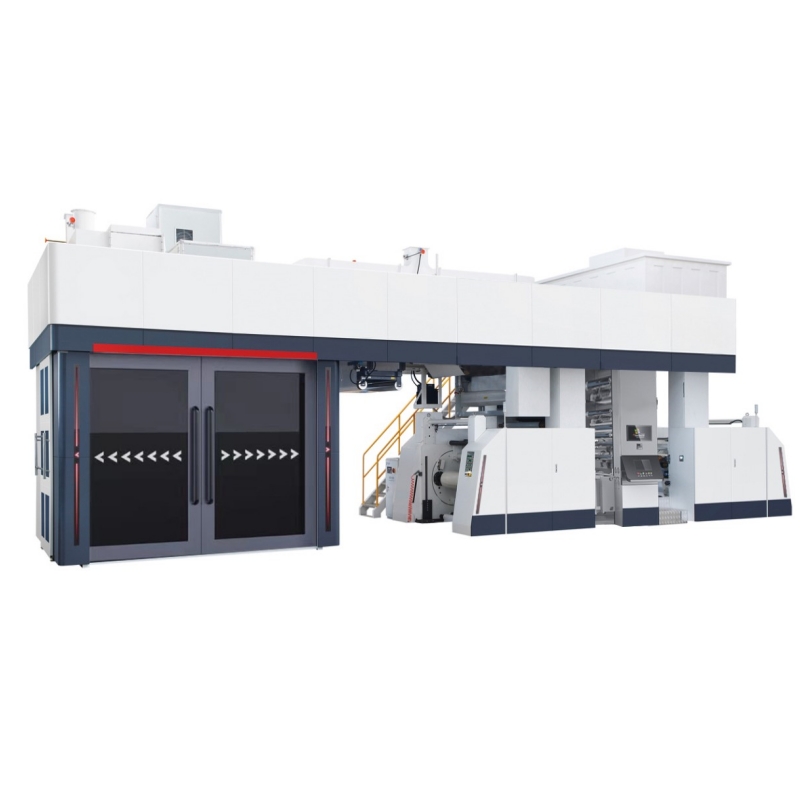
Located in Wenzhou City, Zhejiang Province, China—a renowned global manufacturing hub with exceptional transportation access—Wenzhou Jinyuan Mechanical Technology Co., Ltd.is a modern provider of slitting, rewinding, and Printing Equipment solutions integrating technical R&D, production, manufacturing, and international sales.
Our company boasts a modern, standardized production workshop covering over 3,000 square meters and a dedicated workforce of nearly 70 experienced employees. At the core of our innovation engine are 11 technical engineers and 6 core R&D specialists who excel at customizing user-friendly, highly stable systematic converting solutions tailored to our customers' actual production requirements.
Core Advantages of Jinyuan Machinery's Coreless Slitter Rewinders:
- Certified International Quality: Our factory operates under strict ISO 9001 quality management standards, and all converting machinery carries official CE certification for safety and operational compliance.
- Patented Converting Innovations: Backed by multiple national technical patents, Jinyuan machinery incorporates cutting-edge tension control, automatic shaft extraction, and high-speed web slitting technologies.
- Unrivaled Customization Capabilities: Whether you require high-speed thermal POS roll production, thick coated paper slitting, or ultra-sensitive biodegradable film converting, our R&D team customizes knife geometry, tension sensors, and shaft dimensions to your exact specs.
- Proven Global Track Record: From pre-sale technical evaluation and material sample testing to international freight handling, installation, and remote engineer training, Jinyuan Machinery provides robust lifetime support for clients worldwide.
7. Frequently Asked Questions (FAQ)
Q1: How difficult is it to switch a Jinyuan machine between coreless mode and paper core mode?
A: It is exceptionally simple and fast. Our machines feature quick-change shaft chucks and intuitive touch-screen PLC controls. Switching from coreless air mandrels to traditional paper core shafts typically takes an operator less than 10 to 15 minutes, allowing you to run flexible batch jobs without long machine downtime.
Q2: Can a Coreless Automatic Slitter Rewinder process self-adhesive sticker labels without adhesive bleeding?
A: Yes. Jinyuan Machinery equips its label slitting models with specialized non-stick coated guide rollers and precision tapered tension algorithms. By automatically reducing radial squeeze pressure as the roll outer diameter increases, the adhesive layer is preserved without edge squeeze or bleeding.
Q3: Why is biodegradable film slitting harder than thermal paper slitting, and how does your machine handle it?
A: Biodegradable films (such as PLA and PBAT) have high elasticity, easily stretching out of shape under tension spikes, and generate strong static charges. Our coreless slitter rewinders solve this by integrating low-inertia dancer rollers, closed-loop servo tension loops, and high-output anti-static ionizer bars to maintain constant low-tension stability.
Q4: What certifications and quality warranties do Jinyuan Machinery equipment come with?
A: All equipment produced by Wenzhou Jinyuan Mechanical Technology Co., Ltd. is CE certified, ISO 9001 quality system compliant, and supported by a standard 12-month comprehensive machine warranty along with lifetime remote technical support and spare parts availability.
Transform Your Converting Factory with Jinyuan's Coreless Technology!
Whether you need to cut paper core costs on high-speed POS thermal rolls or expand into eco-friendly biodegradable film slitting, Wenzhou Jinyuan Mechanical Technology Co., Ltd. delivers custom-engineered, CE-certified machinery tailored to your exact operational goals.
Visit our official website: www.jinyuan-machinery.com | CE & ISO Certified Factory | Wenzhou, China