
 Contact immediately



0102030405
Manual vs Automatic Slitting Machine: Which One Is Better for Your Production?
2026-08-24
Table of Contents
In the competitive industrial converting, packaging, and manufacturing sectors, the slitting machine stands as one of the most essential pieces of processing equipment. It plays a critical role in cutting large rolls of paper, film, foil, and flexible packaging materials into precise, narrower rolls to meet diverse production and packaging needs. For factory owners, production managers, and procurement specialists worldwide, the most common dilemma is choosing between manual vs Automatic Slitting Machine models. Each type features unique structural designs, operational mechanisms, performance capabilities, and cost structures that directly impact production efficiency, product quality, and long-term business profitability.
As global manufacturing demands shift toward higher precision, faster output, and lower labor dependency, understanding the core differences between manual and Automatic Slitting Machines has become non-negotiable. This in-depth guide from Wenzhou Jinyuan Machinery Technology Co., Ltd. breaks down every key aspect of these two slitting machine types, including working principles, performance metrics, cost factors, application scenarios, pros and cons, and expert selection tips to help you make a data-driven purchasing decision tailored to your production scale and requirements.
What Is a Slitting Machine and How Does It Work?
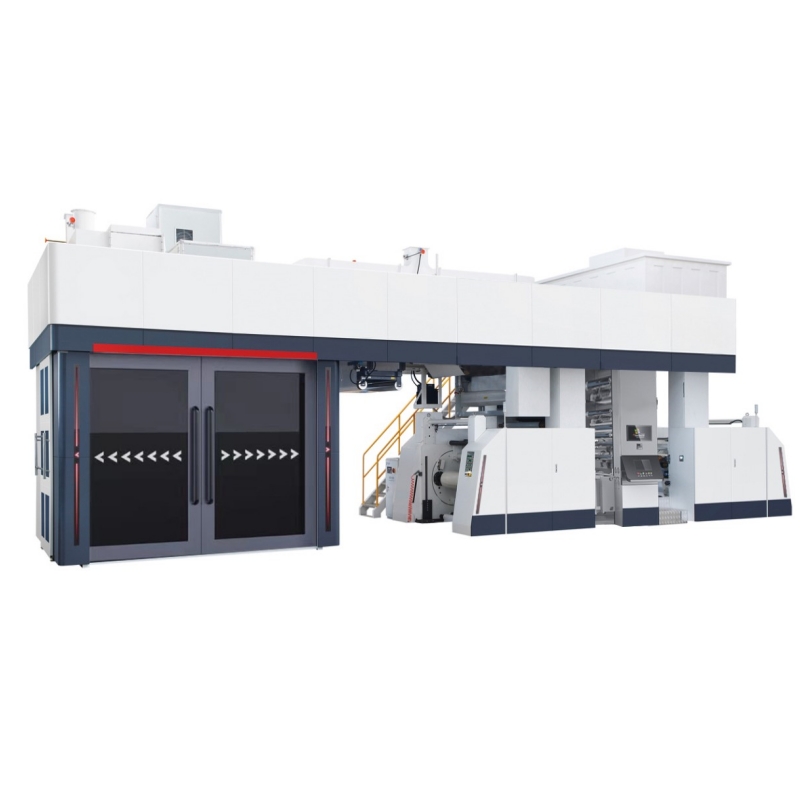
A slitting machine is specialized industrial processing equipment designed for longitudinal cutting of large-format rolled materials. It is widely used to process paper rolls, plastic films, aluminum foils, adhesive tapes, and other flexible web materials, converting wide master rolls into multiple narrow, uniform finished rolls. Beyond basic slitting functions, modern Slitting Equipment is often integrated with rewinding systems, forming an all-in-one slitting and rewinding unit that completes cutting, tension control, and roll finishing in a single workflow.
The core working principle of any slitting machine involves three key stages: material unwinding, precision slitting, and finished product rewinding. First, the master material roll is fixed on the unwinding shaft and released at a stable tension. Second, the material passes through professional cutting blades (either rotary blades or straight blades) to complete longitudinal slitting according to preset width specifications. Finally, the slit narrow materials are rewound into compact, tidy finished rolls for subsequent packaging, transportation, or secondary processing.
Slitting machines are core equipment in logistics packaging, food packaging, medical supplies, and industrial material processing industries. The accuracy, stability, and efficiency of the slitting machine directly determine the yield rate and quality consistency of finished products. At present, industrial slitting machines are mainly divided into two categories: manual slitting machines and Automatic Slitting Machines, which differ drastically in automation level, operational difficulty, and production capacity.
What Is a Manual Slitting Machine? Complete Overview
A manual slitting machine is a semi-automatic, labor-dependent slitting device that relies heavily on manual operation to complete core production processes. It features a simple mechanical structure, with no intelligent control system or automated material switching function. Most operational steps, including master roll loading, material threading, width adjustment, blade positioning, finished roll unloading, and error correction, require manual intervention by workers.
Structurally, a standard manual slitting machine consists of basic components such as an unwinding frame, fixed blade group, manual tension adjustment device, and simple rewinding shaft. It adopts pure mechanical transmission without servo motor control or intelligent sensing modules. Operators need to manually measure and adjust the slitting width before production, manually fix the material position to avoid deviation, and manually stop the machine to replace raw materials and finished products after the master roll is consumed.
Due to its simple structure and low configuration, the manual slitting machine has the characteristics of low equipment cost, small floor space, and easy maintenance. It does not require complex debugging or professional operation skills, making it suitable for small-batch, low-precision production scenarios. However, its production efficiency is limited by manual operation speed, and long-term continuous operation will lead to unstable slitting accuracy and high labor intensity.
In actual production, manual slitting machines are mostly used for processing ordinary paper rolls, common packaging films, and low-precision adhesive tape materials. They are the preferred equipment for small processing factories, workshop-style production lines, and enterprises with intermittent production demands.
What Is an Automatic Slitting Machine? Complete Overview
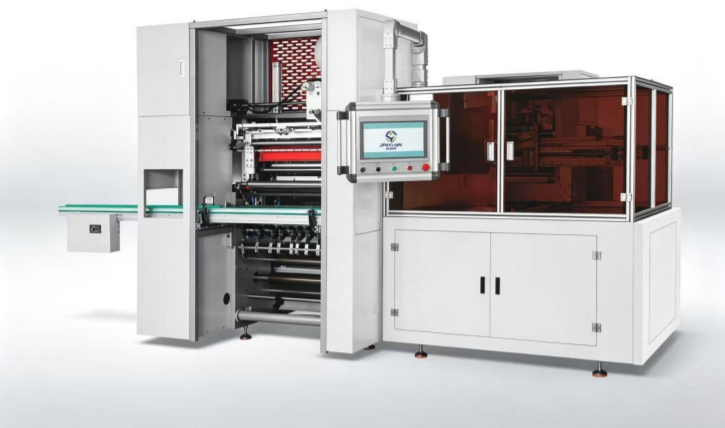
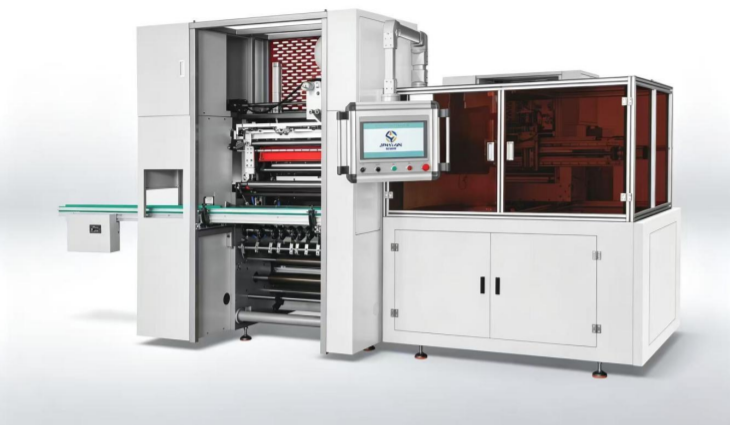
An Automatic Slitting Machine is a high-end, intelligent industrial slitting device integrating automatic control, servo transmission, intelligent sensing, and unmanned operation technology. Representing the advanced level of modern slitting and rewinding equipment, this machine realizes full-process automated production from material loading, threading, slitting, tension control, finished product rewinding, to roll replacement and unloading, with minimal manual participation.
High-quality Automatic Slitting Machines (such as the intelligent slitting and rewinding equipment independently developed by Wenzhou Jinyuan Machinery) adopt a 4-axis non-stop design, supporting full-automatic roll change and paper tube threading with zero downtime loss. Equipped with a LITEGUIDE EC100 intelligent controller and high-precision flying-cut technology, the equipment can automatically adjust blade pressure and slitting parameters in real time according to material characteristics, ensuring ultra-high slitting accuracy and production stability.
In terms of functional configuration, Automatic Slitting Machines are equipped with automatic splicing systems, dual-station winding shafts, intelligent tension feedback systems, and error automatic correction modules. The entire production process is controlled by a digital system, which can store multiple production parameters, realize one-key switching of different material processing specifications, and support customized production modules for industry-specific needs. Certified with CE and ISO international quality standards, modern Automatic Slitting Machines meet the high-standard production requirements of European, American, Southeast Asian and global markets, and are widely used in high-precision fields such as food packaging, medical supplies, and logistics precision materials.
Compared with manual models, Automatic Slitting Machines have the advantages of ultra-high production efficiency, stable processing accuracy, low failure rate, and 24-hour continuous unmanned production, which can effectively reduce labor costs and improve enterprise production capacity and product competitiveness.
Core Comparison: Manual vs Automatic Slitting Machine (Full Spec Table)
To help you intuitively grasp the differences between manual and Automatic Slitting Machines, we have sorted out a comprehensive parameter comparison table covering core indicators such as automation level, production efficiency, slitting accuracy, cost, labor demand, and applicable scenarios, based on Jinyuan Machinery’s industrial equipment data and actual production verification:
| Comparison Indicators | Manual Slitting Machine | |
|---|---|---|
| Automation Level | Semi-automatic, full manual intervention for loading, threading, roll changing and unloading | Full automatic, 4-axis non-stop design, unmanned continuous production, automatic roll change and threading |
| Production Efficiency | Low, limited by manual operation, frequent downtime for material replacement, low hourly output | 300% higher rewinding efficiency than manual models, zero downtime loss, 24-hour continuous production |
| Slitting Accuracy | Low error control, easy material deviation, large size error for finished products | High-precision flying-cut technology, intelligent blade pressure adjustment, ultra-small dimensional error, stable finished product consistency |
| Labor Demand | 1-2 workers required for single machine operation, high labor intensity | 0-1 workers for whole line supervision, extremely low labor dependency |
| Initial Equipment Cost | Low, affordable for small enterprises and individual workshops | High, one-time investment is higher, with long-term cost return advantage |
| Operational Cost | High long-term labor cost, high material waste rate, frequent manual error loss | Low labor cost, low material waste rate, stable operation and low failure maintenance cost |
| Production Stability | Unstable, affected by worker proficiency and working status | Extremely stable, intelligent system automatic control, no human error interference |
| Customization Ability | Weak, only supports single conventional material processing | Strong, supports industry-specific customized modules, adapts to diverse material production needs |
| Certification & Quality | Basic mechanical certification, no international standard quality certification | CE, ISO certified, with multiple technical patents, compliant with global industrial standards |
| Applicable Production Scale | Small-batch, intermittent, low-precision production | Large-batch, continuous, high-precision mass production |
Key Differences Between Manual and Automatic Slitting Machine in Performance & Efficiency
Performance and production efficiency are the core factors that distinguish manual and automatic slitting machines, and also the key indicators affecting enterprise production benefits. The gap between the two types of equipment in actual production operations is far more obvious than parameter differences, mainly reflected in three dimensions: production speed, product quality stability, and continuous production capacity.
First, in terms of production speed and efficiency, automatic slitting machines have an absolute advantage. Jinyuan Machinery’s test data shows that the rewinding and slitting efficiency of high-end automatic models is 300% faster than that of traditional manual slitting machines. The manual slitting machine needs to stop frequently to replace raw material rolls and finished products, resulting in a large amount of downtime loss. In contrast, the automatic slitting machine adopts a 4-axis non-stop structural design, which realizes full-automatic roll change and paper tube threading without any downtime interruption, maximizing effective production time.
Second, in terms of product quality stability, automatic slitting machines completely avoid human error. Manual slitting relies on workers to adjust the blade position and correct material deviation, and the slitting accuracy is easily affected by worker fatigue, proficiency, and operational status, resulting in inconsistent finished product sizes, burrs, and material waste. Automatic slitting machines are equipped with intelligent controllers and high-precision sensing systems, which can monitor material tension and cutting status in real time, automatically adjust blade pressure and parameters, and ensure that every batch of products maintains ultra-high consistency and precision.
Third, in terms of continuous production capacity, manual equipment is only suitable for intermittent production, while automatic equipment supports 24-hour uninterrupted operation. For enterprises with large order volume and long-term continuous production needs, automatic slitting machines can maintain stable output all day long, while manual machines can only work for a short time with frequent rest and adjustment, resulting in far lower daily output than automatic equipment.
Cost Analysis: Manual vs Automatic Slitting Equipment (Initial & Operational)
Equipment cost is a key consideration for most enterprises when purchasing slitting machines. Many customers mistakenly believe that manual slitting machines are more cost-effective due to their low initial price. However, comprehensive calculation of initial investment and long-term operational costs shows that automatic slitting machines have higher long-term cost performance.
1. Initial Purchase Cost
The initial investment of a manual slitting machine is very low, usually only a fraction of an automatic model. It has a simple mechanical structure, no intelligent control system and servo drive components, low manufacturing cost, and is suitable for enterprises with limited short-term budget. The automatic slitting machine involves independent R&D of intelligent control systems, high-precision mechanical parts, and multi-axis linkage technology, with higher initial purchase cost, which belongs to long-term investment equipment.
2. Long-Term Operational Cost
The long-term operational cost of manual slitting machines is extremely high. First, it relies on manual operation for a long time, requiring enterprises to pay continuous labor salaries. Second, manual operation has a high error rate, resulting in a large amount of material waste and low product yield, increasing production costs invisibly. Third, manual equipment has single function and poor stability, which cannot meet high-standard order requirements, limiting enterprise order expansion.
The automatic slitting machine almost eliminates labor dependence, only requiring regular equipment inspection and maintenance. Its high-precision processing greatly reduces material waste, and the stable product quality improves the qualified rate of finished products. Although the initial investment is high, it can recover the cost within 1-2 years through saving labor costs and reducing waste loss, and bring stable profit growth for enterprises in the long run.
When to Choose a Manual Slitting Machine? Ideal Use Cases
Although manual slitting machines are inferior in efficiency and precision, they still have irreplaceable application value in specific scenarios. It is very suitable for the following production demands:
First, small-batch and customized sporadic production. For small processing workshops, startup enterprises, or manufacturers with scattered orders and unstable production volume, manual slitting machines can meet basic production needs without excessive equipment investment, avoiding equipment idle waste caused by insufficient orders.
Second, low-precision conventional material processing. When processing ordinary paper rolls, common packaging paper, low-demand adhesive tapes, and non-precision flexible materials, the error tolerance is high, and the low accuracy of manual slitting machines will not affect product quality and market sales.
Third, enterprises with limited budget and short-term production plans. For newly established factories or temporary production projects with limited capital, manual slitting machines can quickly put into production with low investment, helping enterprises complete initial order accumulation and capital recovery.
Fourth, small-space production scenarios. The manual slitting machine has a compact structure and small floor space, which is suitable for small workshops with limited plant area and cannot place large automatic production equipment.
When to Choose an Automatic Slitting Machine? Ideal Use Cases
Automatic slitting machines are the preferred equipment for medium and large-sized manufacturing enterprises and high-standard production scenarios, and are widely applicable to the following fields:
First, large-batch and continuous mass production. For enterprises with stable order volume and long-term uninterrupted production needs such as logistics packaging, food packaging, and daily necessities processing, the high-efficiency and non-stop production advantages of automatic slitting machines can greatly improve output and delivery capacity.
Second, high-precision and high-standard material processing. Medical packaging materials, food-grade flexible films, precision electronic tapes, and high-end logistics label materials have extremely strict requirements on slitting accuracy and product consistency. The intelligent precision adjustment function of automatic slitting machines can fully meet international high-standard production requirements.
Third, export-oriented and standardized production enterprises. Automatic slitting machines produced by regular manufacturers such as Jinyuan Machinery have CE and ISO international certifications, compliant with European, American, and Southeast Asian market access standards, helping enterprises produce qualified export products and expand global market share.
Fourth, enterprises pursuing long-term cost reduction and efficiency improvement. Automatic equipment reduces labor dependence and material waste, realizes unmanned and intelligent production, effectively reduces enterprise operational costs, and improves overall production efficiency and market competitiveness.
Pros and Cons: Manual vs Automatic Slitting Machine
Pros and Cons of Manual Slitting Machine
Pros: Low initial purchase cost, simple structure and easy maintenance, low technical threshold for operation, small floor space, flexible for small-batch sporadic production, no complex debugging required before use.
Cons: Low production efficiency and serious downtime loss, high labor intensity and high long-term labor cost, unstable slitting accuracy and high material waste rate, poor production consistency, unable to meet high-precision and large-batch production needs, no international quality certification, limited market adaptation.
Pros and Cons of Automatic Slitting Machine
Pros: Ultra-high production efficiency (300% higher than manual models), zero downtime non-stop production, high-precision intelligent cutting, stable product quality, low labor dependency and low long-term operational cost, strong customized adaptation ability, CE & ISO certified, suitable for global high-standard markets and multi-industry production.
Cons: High initial equipment investment, large floor space, requiring professional regular maintenance, certain technical requirements for equipment debugging and parameter setting in the early stage.
How to Choose Between Manual and Automatic Slitting Machine for Your Business?
Choosing the right slitting machine does not mean blindly pursuing high automation or low price. It is necessary to comprehensively judge according to your enterprise’s production scale, material type, precision requirements, order volume, budget and long-term development plan. Here are professional selection suggestions from Jinyuan Machinery’s R&D team:
1. Judge by production scale: If your daily output is low, orders are scattered, and production is intermittent, choose a manual slitting machine to reduce equipment investment pressure. If you have stable large orders, daily mass production needs, and long-term production plans, an automatic slitting machine is the best choice.
2. Judge by product precision requirements: For ordinary low-precision packaging materials, manual equipment can meet the demand. For medical, food, electronic precision materials and export-grade products with strict size and appearance standards, you must choose an automatic slitting machine with high-precision cutting function.
3. Judge by enterprise budget and operation cycle: Start-up enterprises with limited short-term budget can prefer manual equipment for trial production. For enterprises with long-term development goals and pursuing cost reduction and efficiency improvement, investing in automatic slitting machines can create greater economic benefits in the long run.
4. Judge by market orientation: If your products are mainly sold to domestic low-end markets, manual equipment is sufficient. If you are expanding overseas markets (Europe, America, Southeast Asia, etc.), you need to choose CE-certified automatic slitting equipment to meet international market access standards.
5. Judge by labor cost: In regions with high labor costs, automatic slitting machines can greatly save labor expenses and improve profit margins; in regions with low labor costs, small-batch production can temporarily use manual equipment.
FAQs About Manual vs Automatic Slitting Machine
Q1: Is an automatic slitting machine completely better than a manual one?
No. Automatic slitting machines have obvious advantages in efficiency, precision and stability, but they are not suitable for all scenarios. For small-batch, sporadic, low-precision production and enterprises with limited budget and plant space, manual slitting machines are more cost-effective and flexible. The best equipment is the one that matches your actual production needs.
Q2: How long does it take to recover the investment of an automatic slitting machine?
According to Jinyuan Machinery’s customer data statistics, for enterprises with medium and large production volume, the labor cost saved and material waste reduced by automatic slitting machines can recover the initial equipment investment within 12-24 months. After that, the equipment will continuously create pure profit growth for the enterprise.
Q3: Do automatic slitting machines require professional operators?
The operation threshold of modern automatic slitting machines is very low. Equipped with intelligent human-computer interaction systems and one-key operation functions, workers can master basic operation skills after simple training. The equipment realizes automatic operation in the whole process, and only needs one staff member to supervise the production line to deal with occasional abnormal conditions.
Q4: Can automatic slitting machines process multiple types of materials?
Yes. High-quality automatic slitting machines (such as Jinyuan’s customized models) support multi-material adaptive processing. By adjusting intelligent parameters and replacing customized modules, they can process paper rolls, plastic films, aluminum foils, adhesive tapes and other flexible materials, and can be customized according to customers’ special material processing needs.
Q5: What certifications do formal automatic slitting machines need to have?
Formal industrial-grade automatic slitting machines for global sales need to have CE certification (EU safety standard), ISO quality system certification, and independent technical patents. Wenzhou Jinyuan Machinery’s slitting and rewinding equipment has obtained all international authoritative certifications, meeting the market access standards of most countries and regions in the world.
Q6: What is the biggest advantage of 4-axis non-stop automatic slitting machine?
The 4-axis non-stop design independently developed by Jinyuan Machinery realizes full-automatic roll change and paper tube threading, completely eliminating downtime loss caused by manual material replacement. The rewinding efficiency is 300% higher than that of traditional equipment, which maximizes production efficiency and is very suitable for large-scale continuous production.
Final Verdict: Which Slitting Machine Should You Invest In?
After comprehensive comparison of performance, cost, application scenarios and actual production benefits, we can draw a clear conclusion: manual slitting machines are suitable for small-scale, low-precision, intermittent production with limited budget, while automatic slitting machines are the optimal choice for medium and large enterprises pursuing high efficiency, high precision, stable quality and long-term development.
If you are a small workshop or start-up enterprise with small order volume and temporary production needs, a manual slitting machine can help you complete basic production with low investment and avoid capital waste. But if you have the demand for expanding production scale, improving product quality, reducing operational costs, and expanding overseas markets, investing in an automatic slitting machine is a strategic decision worth making.
With the continuous upgrading of global manufacturing standards, intelligent and automated slitting equipment has become the industry development trend. Traditional manual production modes will gradually be unable to meet the increasingly strict market quality requirements and delivery efficiency requirements. Choosing high-quality automatic slitting equipment is conducive to improving enterprise core competitiveness and occupying more market share in the fierce industrial competition.
Get Custom Slitting Machine Solutions From Jinyuan Machinery
Still confused about selecting a suitable slitting machine for your production line? Wenzhou Jinyuan Machinery Technology Co., Ltd., a professional manufacturer of slitting and rewinding equipment with 3000+ square meters production workshop, 70+ professional employees, 11 technical engineers and 6 core R&D personnel, provides one-stop customized equipment solutions for global customers.
Our CE & ISO certified manual and automatic slitting machines cover all production scales from small-batch trial production to large-scale mass production. We can tailor user-friendly, stable and high-efficiency slitting equipment and systematic solutions according to your material type, precision requirements, daily output and budget. Our products are widely exported to Europe, America, Southeast Asia and other global markets, serving logistics, food, medical and many other industries.
Contact us now to get free equipment selection consultation, personalized solution design and factory direct sales quotation! Let Jinyuan Machinery’s professional R&D and manufacturing strength empower your efficient production and help your business grow rapidly in the global market!