
 Contact immediately



0102030405
What Are the Different Types of Slitting Machines? Razor, Shear, Crush Cut & Score Slitting Comparison
2026-08-24
Table of Contents
Introduction: Understanding Slitting Machine Types and Slitting Methods
A professional slitting machine is the backbone of web converting, packaging, and flexible material manufacturing industries worldwide. Every factory processing paper, plastic film, foil, adhesive tape, and roll-based packaging materials relies on precise slitting to convert wide master rolls into narrow, uniform finished rolls. To meet diverse material characteristics, precision standards, and production demands, manufacturers have developed multipletypes of slitting machines and corresponding slitting methods, each designed for specific material types, thicknesses, and finish requirements.
Most industrial buyers and production managers struggle to distinguish between razor slitting, shear slitting, crush cut slitting, and score slitting — the four mainstream slitting technologies in modern manufacturing. Choosing the wrong slitting machine type will lead to poor cutting quality, material waste, low production efficiency, and even unqualified finished products that fail market inspection standards.
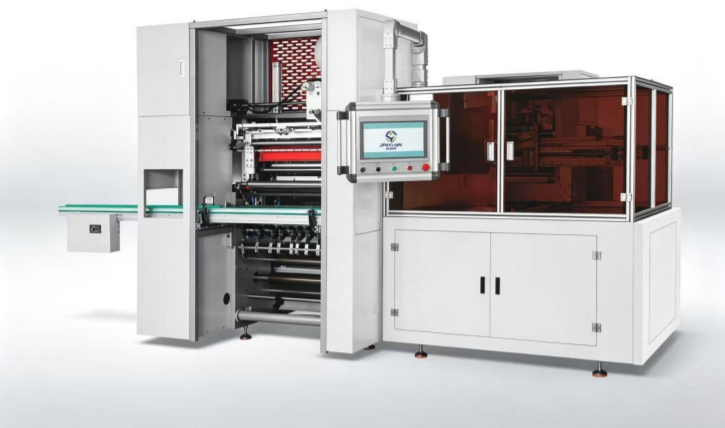
This comprehensive SEO guide fully analyzes all core types of slitting machines and industrial slitting methods, covering working principles, advantages, disadvantages, applicable materials, and industry scenarios. We also provide a detailed comparison table and professional selection tips to help you accurately match the best slitting solution for your production line. As a professional manufacturer of slitting and rewinding equipment, Wenzhou Jinyuan Machinery Technology Co., Ltd. integrates R&D, production, and sales, providing customized high-precision slitting machine solutions for global customers across logistics, food, and medical industries.
What Are Industrial Slitting Methods & How Do They Work?
Industrial slitting methods refer to the core mechanical cutting technologies adopted by slitting machine equipment to process continuous web materials. Unlike traditional static cutting, industrial slitting is a dynamic high-speed cutting process that completes longitudinal cutting of rolling materials during continuous material conveying.
All modern types of slitting machines rely on four mature, mainstream slitting methods: razor slitting, shear slitting, crush cut slitting, and score slitting. Each method has an independent mechanical structure and cutting logic, adapting to different material hardness, thickness, toughness, and precision requirements.
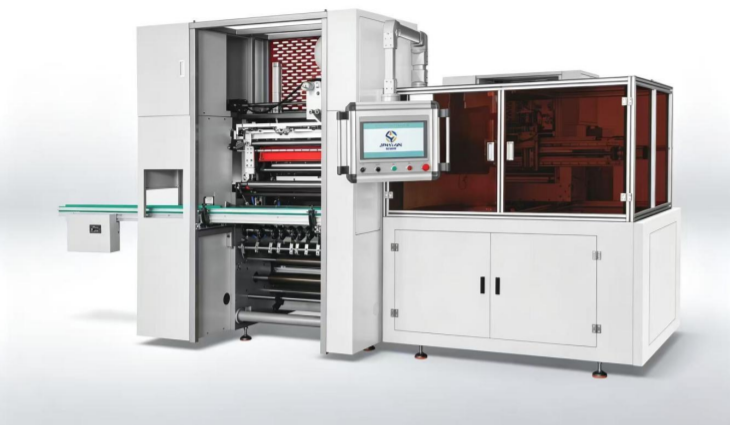
High-quality industrial Slitting Equipment (such as Jinyuan Machinery’s intelligent slitting machines) can switch different slitting modes and blade combinations according to customer material characteristics, realizing multi-scene adaptive production. Equipped with LITEGUIDE EC100 intelligent controllers and high-precision flying-cut technology, our equipment ensures stable and efficient operation of various slitting methods.
What Is Razor Slitting? Working Principle, Pros, Cons & Applications
Razor Slitting Working Principle
Razor slitting is the simplest and most widely used high-speed slitting method among all types of slitting machines. It adopts ultra-thin sharp razor blades (similar to industrial razor blades) as the cutting core. The blade is fixed vertically or obliquely on the equipment frame, and the moving web material passes through the blade edge at a constant speed, completing linear cutting through the sharp blade edge shear force.
The razor slitting machine does not need complex mechanical coordination. It relies entirely on the sharpness of the blade and the stable traction of the material to complete cutting. The equipment structure is compact, and the blade position and spacing can be adjusted freely to realize multi-width simultaneous slitting.
Pros of Razor Slitting
First, it supports ultra-high-speed production, with low cutting resistance and no material jamming, which is very suitable for continuous large-batch production. Second, the cutting edge is flat and smooth without burrs, with excellent finish for thin flexible materials. Third, the equipment cost is low, the blade replacement and maintenance are simple, and the operation threshold is low. Fourth, the adjustment flexibility is high, supporting arbitrary width cutting within the equipment range.
Cons of Razor Slitting
Razor slitting has strict limitations on material thickness and hardness. It is only suitable for ultra-thin soft materials and cannot cut thick, hard, or high-toughness materials. The razor blade wears quickly, requiring regular replacement to avoid cutting defects. In addition, the blade is exposed during operation, requiring strict safety protection measures.
Razor Slitting Applications
Razor slitting machines are mainly used for ultra-thin flexible materials, including thin plastic films, packaging films, tissue paper, lightweight adhesive tapes, aluminum foil sheets, and label base materials. They are widely applied in light packaging, daily necessities processing, and logistics label production industries.
What Is Shear Slitting? Working Principle, Pros, Cons & Applications
Shear Slitting Working Principle
Shear slitting is a high-precision dual-blade cutting method, also known as rotary shear slitting, which is the most versatile technology in all slitting methods. Different from single-blade razor cutting, shear slitting machines are equipped with upper and lower groups of circular rotary blades, forming a staggered shear structure similar to scissors.
During operation, the upper and lower circular blades rotate synchronously at a high speed. The web material passes through the gap between the two groups of blades, and the staggered shear force generated by the rotary blades completes precise longitudinal cutting. The equipment can accurately adjust the blade gap and overlap according to material thickness and toughness to ensure cutting accuracy.
Pros of Shear Slitting
Shear slitting has extremely high cutting precision and stable finished product quality, with almost no burrs, wrinkles, or material deformation. It has strong material adaptability, covering thin flexible materials and medium-thick tough materials. The rotary blade has low wear resistance and a long service life, reducing long-term maintenance costs. It supports high-speed continuous production and is suitable for mass standardized production.
Cons of Shear Slitting
The equipment structure is complex, with high initial manufacturing and procurement costs. Blade gap adjustment requires professional technology and precise debugging, with a slightly higher operation threshold than razor slitting. The equipment occupies a larger floor space and requires regular professional maintenance of the transmission system.
Shear Slitting Applications
Shear slitting is the most mainstream slitting method in industrial manufacturing, suitable for medium and thin paper rolls, composite packaging materials, food-grade packaging films, medical flexible materials, thick adhesive tapes, and plastic sheets. It is widely used in high-standard industries such as food packaging, medical supplies, and high-end logistics packaging, and is the core configuration of Jinyuan Machinery’s mainstream Automatic Slitting Machines.
What Is Crush Cut Slitting? Working Principle, Pros, Cons & Applications
Crush Cut Slitting Working Principle
Crush cut slitting is a special extrusion cutting slitting method, which abandons the traditional shear cutting logic. The crush cut slitting machine is composed of a sharp upper rotary blade and a flat elastic bottom roller (usually rubber roller). During operation, the upper blade presses down vertically, extruding the material on the elastic bottom roller, and completes cutting through pressure crushing.
The core feature of this slitting method is no blade gap adjustment. The cutting force comes from vertical extrusion pressure, which can completely avoid material pulling and deformation during the cutting process, and is specially designed for fluffy, porous, and easily deformed materials.
Pros of Crush Cut Slitting
It has an excellent cutting effect on fluffy and porous materials, effectively avoiding material fluffing, pulling, and edge warping. The operation and debugging are simple, with no complex blade gap calibration required. The equipment runs stably with low noise and low vibration. The cutting edge is neat and compact, with good three-dimensional effect of finished products.
Cons of Crush Cut Slitting
The cutting speed is lower than razor and shear slitting, and it is not suitable for ultra-high-speed continuous production. The elastic bottom roller is easily worn and aged, requiring regular replacement. It is not applicable for hard and high-density materials, which are prone to incomplete cutting.
Crush Cut Slitting Applications
Crush cut slitting machines are specially used for porous and fluffy materials, including non-woven fabrics, sponge materials, fluffy paper, textile rolls, and soft foam packaging materials. They are widely used in medical protection materials, textile processing, and flexible packaging cushioning material production.
What Is Score Slitting? Working Principle, Pros, Cons & Applications
Score Slitting Working Principle
Score slitting, also known as indentation slitting, is a semi-cutting and full-cutting dual-purpose slitting method, which is a special type among all types of slitting machines. The equipment adopts high-hardness sharp circular scoring blades. Different from through cutting, score slitting can adjust the blade pressing depth to realize full cutting or shallow indentation on the material surface.
During production, the blade can completely cut off the material to realize conventional slitting, or only indent a uniform trace on the material surface without cutting through the base material, which is convenient for subsequent folding and processing of finished products. This unique cutting feature makes it irreplaceable in customized packaging material processing.
Pros of Score Slitting
It supports dual functions of full cutting and indentation, with strong production flexibility and multi-purpose equipment. The indentation depth is precise and controllable, with uniform indentation lines and no material damage. It is suitable for customized processing of packaging materials, greatly improving the flexibility of finished product design. The equipment runs stably with low material waste rate.
Cons of Score Slitting
The full-cutting speed is slower than shear slitting, and the production efficiency of mass single-specification products is limited. The blade precision requirement is extremely high, and the equipment manufacturing cost is high. It requires professional parameter adjustment for different material thicknesses and indentation requirements.
Score Slitting Applications
Score slitting machines are mainly used for packaging materials that need indentation and folding processing, including carton base paper, color box packaging paper, folding plastic sheets, label sticker base materials, and customized packaging rolls. They are widely used in printing and packaging, gift packaging, and customized label processing industries.
How to Choose the Right Slitting Machine Type for Your Materials?
3. Select according to finished product quality requirements: For products with strict edge finish and size precision requirements (such as medical packaging and export-grade materials), adopt shear slitting technology with ultra-high precision. For ordinary low-demand packaging materials, cost-effective razor slitting can meet production needs.
Packaging & Printing Industry: Shear slitting and score slitting machines are dominant, used for processing food packaging films, carton paper, color box materials and label base materials, meeting high-precision and customized packaging production needs.
Electronic & Industrial Material Industry: High-precision shear Slitting Equipment processes electronic adhesive tapes, insulating films and metal foil materials, meeting strict industrial precision standards.
Q2: Which slitting method has the highest precision?
Q4: Can one slitting machine support multiple slitting methods?
Q6: Are Jinyuan slitting machines compliant with international standards?
The company owns a 3,000-square-meter standardized production workshop and a professional team of nearly 70 employees, including 11 professional technical engineers and 6 core R&D personnel. With strong independent R&D capabilities, we master core technologies of four major slitting methods, and can independently develop and produce razor, shear, crush cut, and score slitting machines, as well as multi-functional customized Slitting Equipment.
Still unsure which types of slitting machines and slitting methods match your production needs? Don’t let mismatched equipment affect your production efficiency and product quality!